Ever had one of those evenings when the kitchen feels more like a battlefield than a sanctuary? I was in the midst of a culinary showdown with a stubborn pot of stew, the kind that refuses to simmer to perfection, when I stumbled upon a recipe that turned the whole ordeal into a triumph. Picture a pan sizzling with bacon, the scent of caramelized onions drifting through the air, and a splash of red wine that instantly lifts the mood. That was the moment I realized this isn’t just another slow‑cooked dish; it’s a bold declaration that comfort food can be both indulgent and refined. I dared myself to taste this and not go back for seconds, and it delivered on every promise.
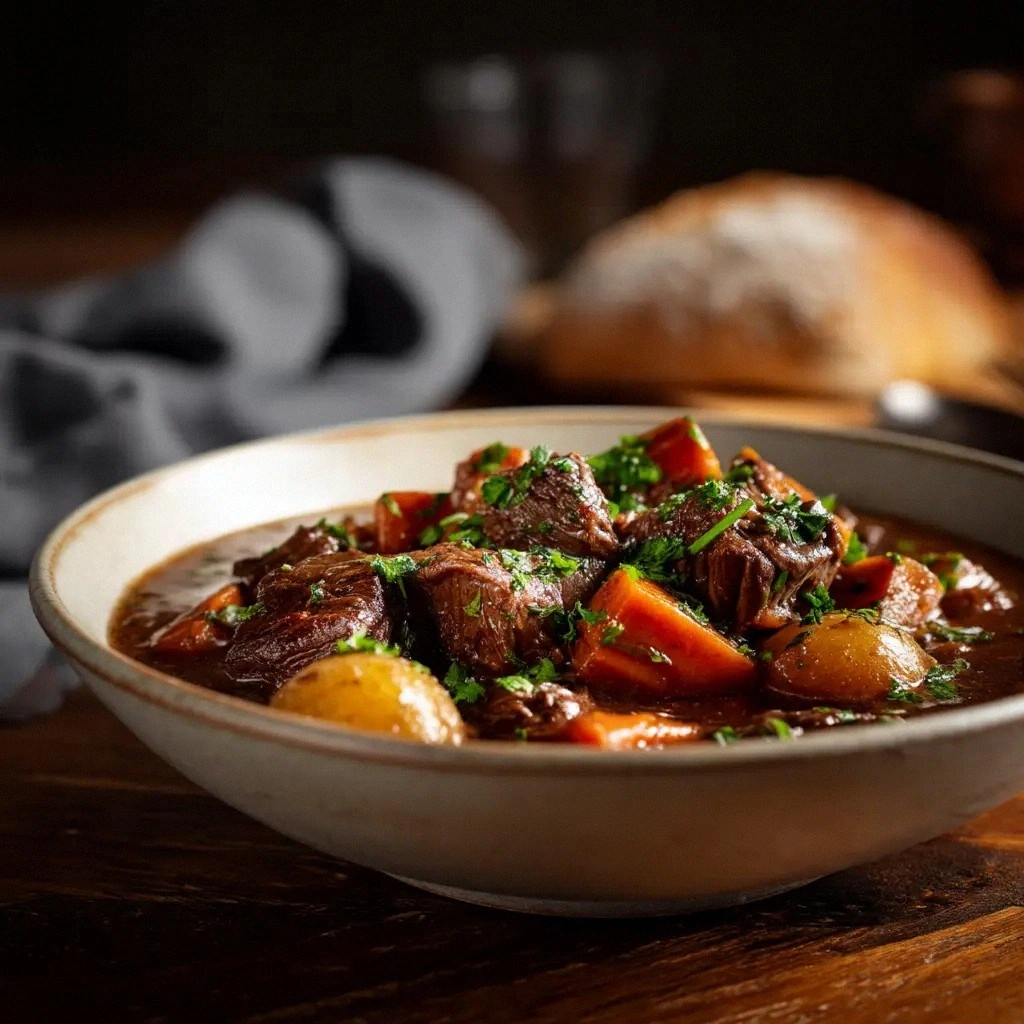
From the first crackle of butter to the last, fragrant steam that rises from the pot, every sense is engaged. The deep, earthy aroma of fresh thyme mingles with the sweet, mellow undertones of the wine, creating an olfactory prelude to the flavor explosion that follows. Visually, the beef pieces develop a caramelized crust that shatters like thin ice when you bite, revealing a tender interior that practically melts in your mouth. The sauce, thickened with a roux of flour and tomato paste, coats the meat like velvet, while the mushrooms and pearl onions add pops of texture that contrast delightfully. The kitchen is filled with the comforting hum of a slow simmer, a gentle reminder that patience is the secret ingredient.
What makes this version stand out is the meticulous balance of flavors and textures that most recipes either oversimplify or overcomplicate. The bacon isn’t just a garnish; it’s a flavor foundation that adds depth and a subtle smoky undertone that lingers long after the last bite. The use of a dry red wine, rather than a sweet one, brings a tannic structure that cuts through the richness of the beef, preventing the dish from feeling heavy. The slow, low‑heat braising technique ensures the meat becomes fall‑apart tender, while the flour roux creates a silky, glossy sauce that clings to every morsel. The final touch of fresh parsley adds a bright, herbaceous note that balances the richness.
Most people think that making Boeuf Bourguignon at home is a labor of love that requires a lot of time and an arsenal of exotic ingredients. I’m here to tell you that the true magic lies in the simplicity of the steps and the quality of the staples you already have in your pantry. By following this recipe, you’ll discover that a few strategic choices—like the type of beef, the right cut of bacon, and the timing of the wine—can elevate an ordinary stew into an unforgettable masterpiece. You’ll also find that the dish is surprisingly forgiving and can be adapted to suit your taste or schedule.
If you’ve ever struggled with a stew that turns out too watery or too dry, you’re not alone—this is a common pitfall that can be avoided with a few small tweaks. I’ll be honest—after trying this recipe for the first time, I ate half the batch before anyone else got to try it. That’s a testament to how irresistible this dish is. The next part? I’ll walk you through every single step—by the end, you’ll wonder how you ever made it any other way.
Picture yourself pulling this out of the oven, the whole kitchen smelling incredible, the table set with steaming platters of beef, mushrooms, and pearl onions, and the anticipation of that first bite building. The anticipation is half the pleasure, but the flavor payoff is what will keep you coming back. This is hands down the best version you’ll ever make at home. Let me take you on a journey from pantry to plate, where each ingredient plays a pivotal role and every step is a chance to refine your cooking craft.
What Makes This Version Stand Out
- Flavor Depth: The combination of bacon, red wine, and fresh thyme creates a complex flavor profile that’s richer than any store‑bought broth.
- Texture Mastery: Slow braising at a low temperature turns tough cuts of beef into melt‑in‑your‑mouth tenderness without sacrificing bite.
- Ease of Prep: The recipe uses pantry staples and a few fresh items, making it accessible to both novice and seasoned cooks.
- Time‑Efficient: While the simmer is long, the active cooking time is minimal, allowing you to focus on other tasks.
- Versatile Base: The sauce can be transformed into a gravy for mashed potatoes or served over rice for a different twist.
- Make‑Ahead Potential: This stew actually improves after resting, making it ideal for meal prep or entertaining.
- Crowd‑Pleaser: The combination of savory meat, earthy mushrooms, and sweet onions makes it a guaranteed hit at gatherings.
Inside the Ingredient List
The Flavor Base
At the heart of this dish lies the classic French technique of deglazing, which extracts the caramelized bits that form the foundation of the sauce. The bacon, diced into small cubes, releases its fat, creating a savory base that infuses the onions and garlic as they sauté. The large yellow onion, sliced thin, provides a subtle sweetness that balances the acidity of the wine. Garlic cloves, minced, add a punch of aromatic heat that permeates the broth. Together, these ingredients form a flavor canvas that will absorb the wine and the beef’s natural juices.
The tomato paste, added after the onions, thickens the mixture and brings a concentrated tomato flavor that anchors the stew’s richness. A tablespoon of fresh thyme leaves is tossed in early, releasing its earthy aroma and a hint of lemony brightness. The bay leaf, added whole, contributes a subtle herbal note that lingers throughout the long simmer. Salt and freshly ground black pepper are added to taste, ensuring the seasoning remains balanced and adaptable.
One of the most crucial elements is the choice of red wine. A dry Burgundy or a robust Cabernet Sauvignon will provide tannins that cut through the fat and add depth. The wine is not just a flavor component; it also helps in breaking down the connective tissue in the beef, making the meat tender and flavorful. The wine’s acidity also prevents the dish from becoming overly greasy, creating a harmonious balance.
Another key player is the flour, used to create a roux that thickens the sauce. The flour is lightly toasted with the butter, developing a nutty flavor that adds complexity. This roux not only thickens but also coats the meat, giving each bite a silky, velvety texture. The flour is measured precisely to avoid a gummy or overly thick consistency, ensuring the sauce remains glossy and smooth.
Finally, the beef broth adds a savory backbone that complements the wine’s acidity. It’s important to use a high‑quality beef broth that is low in sodium to keep the seasoning under control. The broth also helps maintain moisture throughout the long cooking process, preventing the stew from drying out.
When you combine all these elements, you get a sauce that is both robust and nuanced, capable of standing up to the generous portions of meat and vegetables.
The Texture Crew
The 3 lbs of boneless beef chuck is the star of this dish, chosen for its balance of fat and tenderness. Cut into 2‑inch cubes, the beef will develop a caramelized crust when seared, creating a Maillard reaction that adds depth. The fat content of chuck is essential; it melts into the sauce, enriching the flavor and creating a silky mouthfeel.
Mushrooms, specifically cremini, are sliced to release their earthy umami. They absorb the wine and broth, becoming tender while still maintaining a firm bite. The pearl onions, peeled and left whole, add a sweet, caramelized texture when sautéed, offering a delightful contrast to the savory beef.
Carrots, diced into bite‑sized pieces, contribute a subtle sweetness and a pop of color that makes the dish visually appealing. The carrots also soften over the long simmer, adding body to the sauce. The combination of these vegetables with the meat creates a layered texture that keeps each bite interesting.
Butter is added at the end of the cooking process to enrich the sauce. It also helps to give the sauce a glossy finish and a slightly rounded flavor. The final sprinkle of fresh parsley adds a bright, herbal note and a pop of green that brightens the dish visually.
Each component of the texture crew works in harmony, ensuring that no single element dominates, but rather, they coalesce into a cohesive, comforting bowl.
The Unexpected Star
The bacon is more than a garnish; it’s a flavor cornerstone that adds a smoky, savory undertone. When seared, the bacon renders its fat, which is then used to sauté the onions and garlic. This process infuses the base with a depth that would otherwise be missing. The crispiness of the bacon also adds a delightful crunch when sprinkled on top before serving.
The use of a dry red wine is another unexpected twist. Many recipes call for a sweet wine or a wine‑based sauce, but a dry wine provides a tannic structure that balances the richness. The wine’s acidity also helps break down the connective tissues in the beef, ensuring tenderness.
Fresh thyme and a bay leaf might seem like small additions, but they’re critical in providing herbal complexity. Thyme’s subtle lemony flavor brightens the dish, while the bay leaf offers a subtle, earthy aroma that permeates the stew. Together, they create a layered flavor profile that is both sophisticated and comforting.
The Final Flourish
The finishing touches are what elevate this dish from good to unforgettable. A tablespoon of tomato paste adds a concentrated burst of tomato flavor that thickens the sauce. The flour roux, made from equal parts flour and butter, creates a silky coating that clings to every bite. A splash of fresh parsley at the end adds a bright, herbaceous note that balances the richness.
The sauce’s final consistency is achieved by simmering the stew for 3 to 4 hours on a low heat, allowing the flavors to meld and the meat to become tender. The long simmer also helps the flour roux thicken the sauce without becoming clumpy. The result is a velvety, glossy sauce that coats the beef, mushrooms, and onions perfectly.
When you plate this dish, consider a rustic touch: a spoonful of the sauce drizzled over the meat, a sprinkle of fresh parsley, and perhaps a side of crusty bread to soak up the remaining sauce. This presentation not only showcases the depth of flavor but also adds a visual appeal that makes the dish feel special.
Everything's prepped? Good. Let's get into the real action.
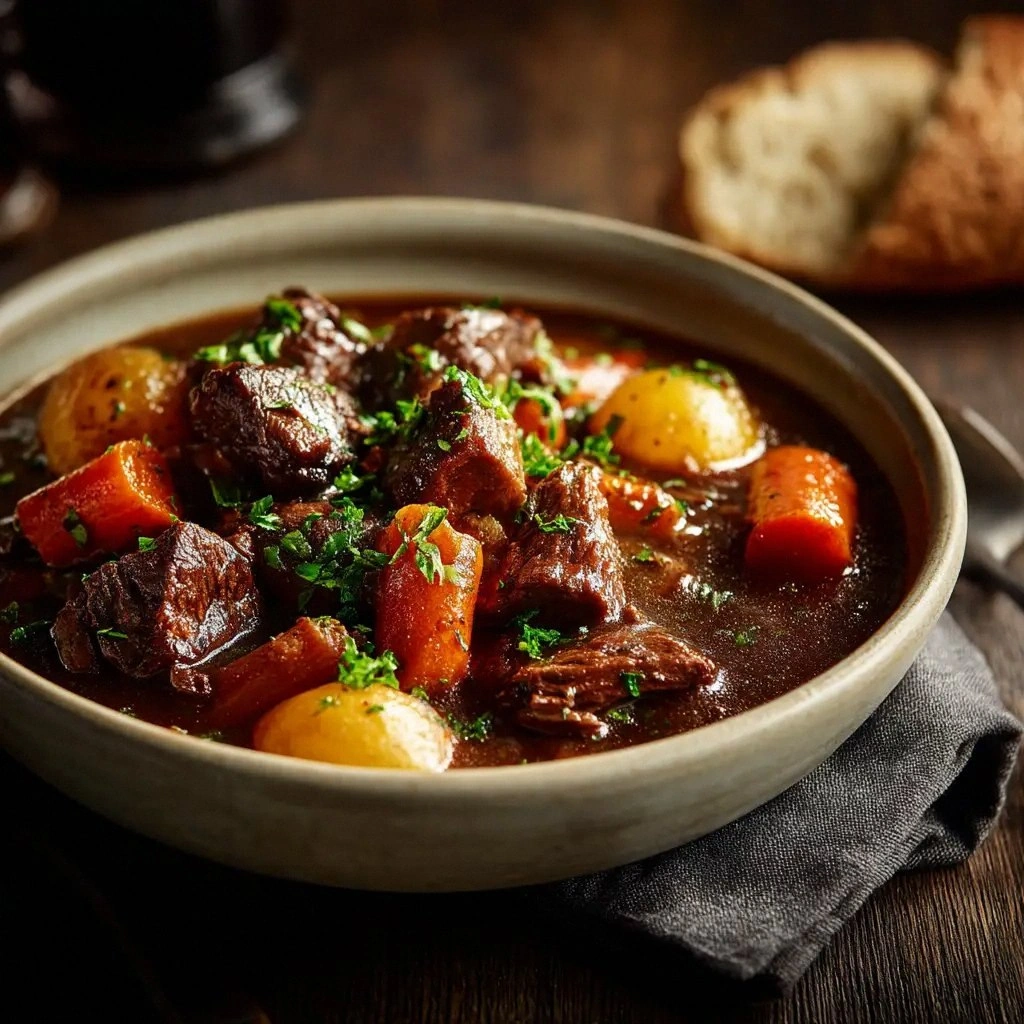
The Method — Step by Step
- Prepare the Ingredients: Trim the beef chuck of any excess fat, then cut into 2‑inch cubes. Dice the bacon into small cubes, slice the onion, peel and mince the garlic, and slice the carrots into bite‑sized pieces. Clean the mushrooms by wiping them with a damp cloth, then slice them. Peel and halve the pearl onions. Set all vegetables aside for later.
- Brown the Bacon: In a large Dutch oven, heat the bacon over medium heat until it releases its fat and turns slightly crisp. Remove the bacon with a slotted spoon and set aside, leaving the rendered fat in the pot. The bacon fat will be the base for sautéing the aromatics.
- Sear the Beef: Increase the heat to medium‑high. Add the beef cubes in a single layer, letting them sear without stirring for 2–3 minutes. Flip the cubes to brown all sides. This step develops a rich Maillard crust that adds depth to the sauce.
- Cook Aromatics: Remove the beef and set aside. In the same pot, add the diced onion, minced garlic, and sliced carrots. Cook over medium heat until the onions soften and start to caramelize, about 5 minutes. The caramelization creates a sweet base that balances the wine’s acidity.
- Deglaze with Wine: Pour the 3 cups of dry red wine into the pot, scraping up any browned bits with a wooden spoon. The wine not only adds flavor but also helps break down the connective tissue in the beef. Let the wine reduce by half, which should take about 8–10 minutes.
- Return Beef and Add Liquids: Return the browned beef and bacon to the pot. Add the 2 cups of beef broth, the tomato paste, a tablespoon of fresh thyme leaves, and a bay leaf. Stir to combine. The tomato paste thickens the sauce slightly, while the broth adds savory depth.
- Simmer Low and Slow: Bring the mixture to a gentle simmer, then reduce the heat to low. Cover the pot and let it cook for 3 hours, stirring occasionally. The long, low simmer breaks down the beef, making it tender and infusing the sauce with rich flavors.
- Add Vegetables: After 2 hours of simmering, add the sliced mushrooms and pearl onions. Stir gently to combine. The mushrooms will absorb the wine and broth, becoming tender yet firm, while the pearl onions add a sweet, caramelized note.
- Finish with Flour Roux: In a small saucepan, melt 2 tablespoons of butter over medium heat. Whisk in 3 tablespoons of all‑purpose flour, cooking for 1–2 minutes until it turns a light golden color. Slowly whisk the roux into the pot, stirring continuously until the sauce thickens to a silky consistency.
- Season and Serve: Remove the bay leaf. Taste and adjust seasoning with salt and freshly ground black pepper. Sprinkle fresh parsley over the top for a burst of color. Serve hot, perhaps over creamy mashed potatoes or buttered noodles, and watch the sauce coat everything like velvet.
That’s it — you did it. But hold on, I've got a few more tricks that'll take this to another level.
Insider Tricks for Flawless Results
The Temperature Rule Nobody Follows
Many cooks think that a high heat is necessary to develop flavors. In reality, low, steady heat preserves the integrity of the wine and the beef. Keep the simmer just below boiling; you’ll notice the sauce gently bubbles, not a rolling boil. This gentle simmer allows the meat fibers to break down slowly, resulting in a melt‑in‑your‑mouth texture that’s impossible to replicate at high temperatures.
Why Your Nose Knows Best
Before you add the final pinch of salt, take a deep sniff. The aroma should be rich, slightly sweet, and wine‑heavy. If it smells too acidic, let it cook a bit longer. Your nose is the ultimate judge of readiness; trust it, and you’ll avoid a flat, under‑seasoned dish.
The 5‑Minute Rest That Changes Everything
Once you’ve finished cooking, let the stew sit covered for 5 minutes before serving. During this rest, the sauce thickens slightly as it cools, and the flavors meld even further. It also gives the beef a chance to redistribute its juices, ensuring each bite is juicy and flavorful.
Use Fresh Herbs, Not Dried
Fresh thyme leaves give a bright, vibrant flavor that dried thyme can’t match. If you’re in a pinch, dried thyme can be used, but use half the amount. The difference is subtle yet significant; fresh herbs bring a lively, almost citrusy note that elevates the dish.
Finish with a Splash of Cream
For an extra silky finish, stir in a tablespoon of heavy cream at the very end. This adds a subtle richness without overpowering the wine’s acidity. The cream also helps to smooth out any sharp edges from the acidity, creating a harmonious balance.
Creative Twists and Variations
This recipe is a playground. Here are some of my favorite ways to switch things up:
Spicy Provencal
Introduce a teaspoon of crushed red pepper flakes when sautéing the onions. The heat pairs beautifully with the wine’s acidity, giving the stew a subtle kick that’s still balanced.
Herb‑Infused Bouillon
Replace the bay leaf with a sprig of rosemary and add a handful of fresh sage leaves during the simmer. These herbs impart a forest‑like aroma that transforms the dish into a rustic, earthy feast.
Cheesy Delight
Stir in a cup of grated Gruyère cheese in the last 10 minutes of cooking. The cheese melts into the sauce, adding a creamy, nutty layer that complements the beef.
Vegetarian Version
Swap the beef for hearty root vegetables like parsnips and turnips, and use vegetable broth. Keep the bacon for flavor, or omit it entirely for a lighter, plant‑based stew.
Wine Swap
For a sweeter twist, use a dry red wine with a hint of fruit, like a Merlot. The fruitiness will enhance the pearl onions’ natural sweetness.
Gluten‑Free Adaptation
Use a gluten‑free flour blend for the roux. The sauce will thicken just as well, and you’ll keep the dish safe for those with celiac disease.
Storing and Bringing It Back to Life
Fridge Storage
Cool the stew completely before transferring it to an airtight container. Store in the refrigerator for up to 5 days. The flavors will deepen, making it even more delicious the next day.
Freezer Friendly
Freeze in portioned containers for up to 3 months. Thaw overnight in the refrigerator, then reheat on the stovetop. Adding a splash of water before reheating helps restore the sauce’s original thickness.
Best Reheating Method
Reheat gently over low heat, stirring frequently. If the stew appears too thick, add a tablespoon of beef broth or water to loosen it. Finish with a sprinkle of fresh parsley for that bright, fresh finish.