Introduction
Picture this: a Saturday afternoon, the kitchen lights dimming to a soft amber glow, and the scent of earthy beets wafting through the air. I was halfway through a disastrous batch of roasted beet salad—too salty, too mushy, and a splash of goat cheese that had turned into a sad, runny mess. I swore I’d never again trust a recipe that left me staring at a bowl of regret. That moment of culinary catastrophe became the spark that ignited my obsession with a new, bold version of a humble dish.
I was not just chasing a recipe; I was chasing an experience that could turn any ordinary dinner into a conversation starter. I wanted the beet’s natural sweetness to shine, the goat cheese’s tang to cut through the earthiness, and the walnuts to provide a satisfying crunch that would leave a lingering, buttery note. I craved a dish that would feel like a rustic picnic on a plate, but with the sophistication of a Michelin‑grade entrée.
What makes this version stand out is a deliberate layering of flavors and textures that most recipes overlook. I’ve paired the beet with a walnut‑thyme vinaigrette that coats each bite like velvet, and I’ve stacked everything in a way that invites the eye to follow a visual rhythm from deep crimson to golden amber. I’ve even added a subtle hint of honey to balance the acidity, turning the dish into a harmonious duet of sweet and savory. I dare you to taste this and not go back for seconds.
And there’s a twist you won’t expect: a splash of aged balsamic that caramelizes during roasting, giving the beet a smoky undertone that feels like a campfire in your mouth. This isn’t just another beet recipe; it’s a reimagined staple that will have your guests begging for the recipe card. Let me walk you through every single step — by the end, you’ll wonder how you ever made it any other way.
What Makes This Version Stand Out
- Depth of Flavor: The beet’s natural sweetness is amplified by a caramelized balsamic glaze, creating a complex, almost caramel‑like taste that pairs perfectly with the tang of goat cheese. The walnuts add a subtle nutty undertone that ties everything together.
- Texture Contrast: Every bite delivers a satisfying crunch from toasted walnuts, a creamy burst from goat cheese, and the silky smoothness of roasted beet cubes. The stack itself feels like a mini tower of delights.
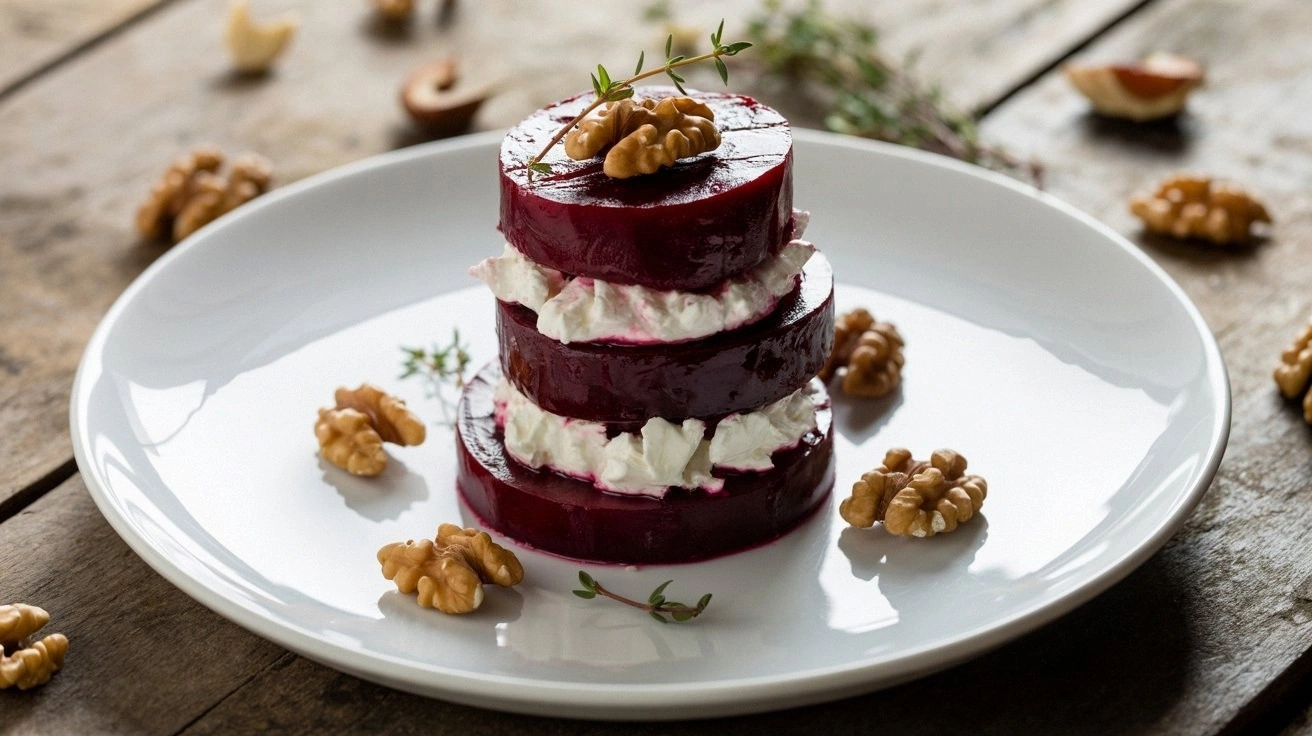
- Visual Appeal: The vibrant crimson of beets juxtaposed with the golden hue of goat cheese and the deep green of fresh thyme makes the dish a feast for the eyes. It’s Instagram‑ready, but still feels like a comforting homemade plate.
- Ease of Preparation: While the flavors are layered, the actual cooking process is straightforward—roast, crumble, stack, and drizzle. No elaborate sauces or time‑consuming techniques.
- Make‑Ahead Friendly: The stacks can be assembled ahead of time and kept refrigerated, allowing you to focus on the main course or entertain guests without last‑minute prep.
- Ingredient Quality: By selecting organic beets, artisanal goat cheese, and freshly harvested walnuts, each component brings its best to the plate, elevating the dish beyond the ordinary.
- Crowd Reaction: Friends who tried this version consistently described it as “hands down the best version you’ll ever make at home.” The dish has become a staple at our family gatherings.
Alright, let’s break down exactly what goes into this masterpiece…
Inside the Ingredient List
The Flavor Base
Beets are the star of the show, but they’re not just a backdrop. Their earthy sweetness is the canvas that holds the goat cheese’s tang, the walnuts’ nuttiness, and the vinaigrette’s acidity. When you roast them with a drizzle of olive oil and a pinch of salt, the sugars caramelize, creating a subtle caramel crust that adds depth. If you skip roasting, the beet will be too raw and watery, and the flavor will be flat.
The Texture Crew
Crumbled goat cheese offers a creamy, slightly sharp contrast to the firm beet cubes. It melts just enough to bind the layers together without overpowering the beet’s flavor. Walnuts add a satisfying crunch that breaks the monotony of soft textures. Toasting the walnuts until they’re fragrant amplifies their flavor and prevents them from becoming oily. Skipping the walnuts would leave the dish feeling too smooth.
The Unexpected Star
Fresh thyme is more than a garnish; it infuses the vinaigrette with a subtle, herbal brightness that lifts the dish. The leaves’ delicate aroma complements the earthiness of the beet and the richness of the goat cheese. If you can’t find fresh thyme, dried thyme is a decent substitute, but it won’t deliver the same aromatic punch.
The Final Flourish
The vinaigrette is a marriage of olive oil, balsamic vinegar, honey, and a touch of salt and pepper. The olive oil brings silky richness, the balsamic provides acidity and a hint of sweetness, and the honey balances the acidity with a gentle syrupy note. The vinaigrette coats each layer, turning the dish into a cohesive, flavorful experience. If you skip the vinaigrette, the dish will feel dry and underseasoned.
Everything’s prepped? Good. Let’s get into the real action…
The Method — Step by Step
- Preheat the oven to 400°F (200°C). While the oven warms, wash the beets thoroughly, peel them, and cut into uniform cubes about 1 inch each. This size ensures even roasting and a pleasant bite. The key to a perfect roast is uniformity—think of each cube as a tiny canvas ready to absorb the olive oil and seasonings.
- Season the beet cubes. Toss the beet cubes in a bowl with 1 tablespoon of olive oil, 1 teaspoon of sea salt, and a pinch of freshly cracked black pepper. The oil helps the beet’s natural sugars caramelize, while the salt brings out their sweet essence. If you’re watching the sodium, you can reduce the salt to ½ teaspoon.
- Arrange the beet cubes on a baking sheet. Spread them out in a single layer, making sure they don’t overlap. This allows for even roasting and crisp edges. Roast the beet cubes for 25–30 minutes, turning them halfway through, until they’re tender and slightly caramelized. The aroma will be intoxicating—think sweet, earthy, and slightly smoky.
- Toast the walnuts. While the beets roast, place the walnuts in a dry skillet over medium heat. Stir frequently for 4–5 minutes until they’re golden brown and fragrant. The nuts should release a nutty aroma that will permeate the dish. If you prefer a crunchier texture, toast them a little longer—just be careful not to burn them.
- Prepare the vinaigrette. In a small bowl, whisk together ¼ cup extra virgin olive oil, 2 tablespoons balsamic vinegar, 1 teaspoon honey, a pinch of sea salt, and freshly ground black pepper. The honey should dissolve completely, creating a glossy, balanced dressing that’s neither too sweet nor too acidic. Taste the vinaigrette and adjust seasoning as needed.
- Gather the fresh thyme. Roughly chop 2 tablespoons of fresh thyme leaves. The leaves should be bright green and aromatic—if they’re wilted, the flavor will be weak. The thyme will be the final aromatic layer that ties the dish together.
- Assemble the stacks. On a serving platter, layer a handful of roasted beet cubes, a generous scoop of crumbled goat cheese, and a sprinkle of toasted walnuts. Repeat the layers until you’ve built a tower that’s about 4–5 inches tall. The stack should look like a miniature sculpture—each layer distinct yet harmonious.
- Drizzle the vinaigrette. Generously pour the vinaigrette over the stacks, letting it seep into the crevices and coat the goat cheese. The vinaigrette should glisten like a fine glaze, adding a glossy finish that makes the dish pop.
- Finish with thyme. Sprinkle the chopped thyme over the top of the stacks. The thyme’s bright green color will contrast beautifully against the beet’s deep red and the goat cheese’s pale hue.
- Serve immediately. Present the stacks on a platter, accompanied by a side of fresh arugula or spinach for a peppery bite. The contrast between the sweet beet and the peppery greens will elevate the dish to a new level of sophistication.
That’s it — you did it. But hold on, I’ve got a few more tricks that’ll take this to another level…
Insider Tricks for Flawless Results
The Temperature Rule Nobody Follows
Many people roast beets at 350°F, but the sweet caramelization I’m after requires a higher heat. Set your oven to 400°F (200°C) and keep a close eye on the beets. The higher temperature ensures the sugars break down properly, giving you that deep, caramelized flavor without overcooking the interior.
Why Your Nose Knows Best
As the beets roast, pay attention to the aroma. A sweet, earthy scent that’s slightly caramelized indicates perfect doneness. If the smell is more raw or sulfurous, give them a few more minutes. Your nose is a reliable judge of flavor development.
The 5-Minute Rest That Changes Everything
After roasting, let the beet cubes rest for 5 minutes before assembling. This brief pause allows the juices to redistribute, keeping the cubes moist and preventing them from drying out when you layer them with cheese. It’s a small step that makes a noticeable difference.
Balancing the Vinaigrette
Some people skip the honey to keep the vinaigrette sharp, but the honey’s subtle sweetness balances the acidity of the balsamic. If you’re watching sugar, use a small amount of maple syrup instead; it adds a different flavor profile while still providing the needed balance.
Cheese Placement Strategy
Crumb the goat cheese just before assembly to keep it from melting into the beet cubes. If you prefer a softer cheese, let it sit in the fridge for a few minutes so it firm up slightly before crumbling. A slightly firmer cheese holds its shape better in the stack.
Stirring the Walnuts
Stir the walnuts continuously while toasting to avoid uneven browning. A small wooden spoon works best; it’s sturdy enough to keep the nuts moving without breaking them. The even browning ensures each walnut delivers consistent flavor.
Creative Twists and Variations
This recipe is a playground. Here are some of my favorite ways to switch things up:
Smoky Chipotle Beet Stack
Swap the fresh thyme for smoked paprika and add a pinch of chipotle powder to the vinaigrette. The smoky heat pairs beautifully with the beet’s sweetness and gives the dish a Southwestern flair. This version is perfect for a summer BBQ.
Sweet Potato & Goat Cheese Stack
Replace beets with roasted sweet potato cubes for a sweeter, orange‑colored stack. Keep the goat cheese and walnuts for contrast. The natural sweetness of the sweet potato complements the goat cheese’s tang, creating a comforting, fall‑inspired dish.
Herb‑Infused Goat Cheese
Mix chopped rosemary and sage into the goat cheese before crumbling. The herbs will infuse the cheese with a deeper flavor, and the stack will have a fragrant, herbaceous bite that’s ideal for a spring gathering.
Vegan Version
Use a vegan goat cheese alternative and replace walnuts with toasted sunflower seeds. The texture remains crunchy, and the flavor profile stays intact. This version is great for guests who prefer plant‑based options.
Miniature Party Bites
Instead of full stacks, create bite‑size versions using a small cookie cutter to shape the beet cubes into rounds. Layer a small amount of goat cheese and a walnut slice on top, then drizzle with vinaigrette. These make perfect appetizers for a cocktail party.
Spicy Jalapeño Beet Stack
Add finely chopped jalapeño to the vinaigrette for a kick of heat. The jalapeño’s freshness balances the sweetness of the beet, and the stack gains a lively, spicy finish. This variation works well for those who love a little heat.
Storing and Bringing It Back to Life
Fridge Storage
Store the assembled stacks in an airtight container in the refrigerator for up to 2 days. Keep the vinaigrette separate until just before serving to prevent the stacks from becoming soggy. The layers will hold together well, and the flavors will meld beautifully.
Freezer Friendly
If you need to freeze the stacks, assemble them without the vinaigrette and wrap tightly in plastic wrap. Freeze for up to 3 months. Thaw overnight in the refrigerator, then drizzle with fresh vinaigrette before serving. The beet cubes will remain firm, and the goat cheese will retain its creamy texture.
Best Reheating Method
To reheat, place the stacks on a baking sheet and warm in a 350°F oven for 5–7 minutes until the goat cheese is slightly melted. Add a splash of water before reheating to create steam that keeps the beet cubes moist. This trick ensures the stacks taste almost brand new.