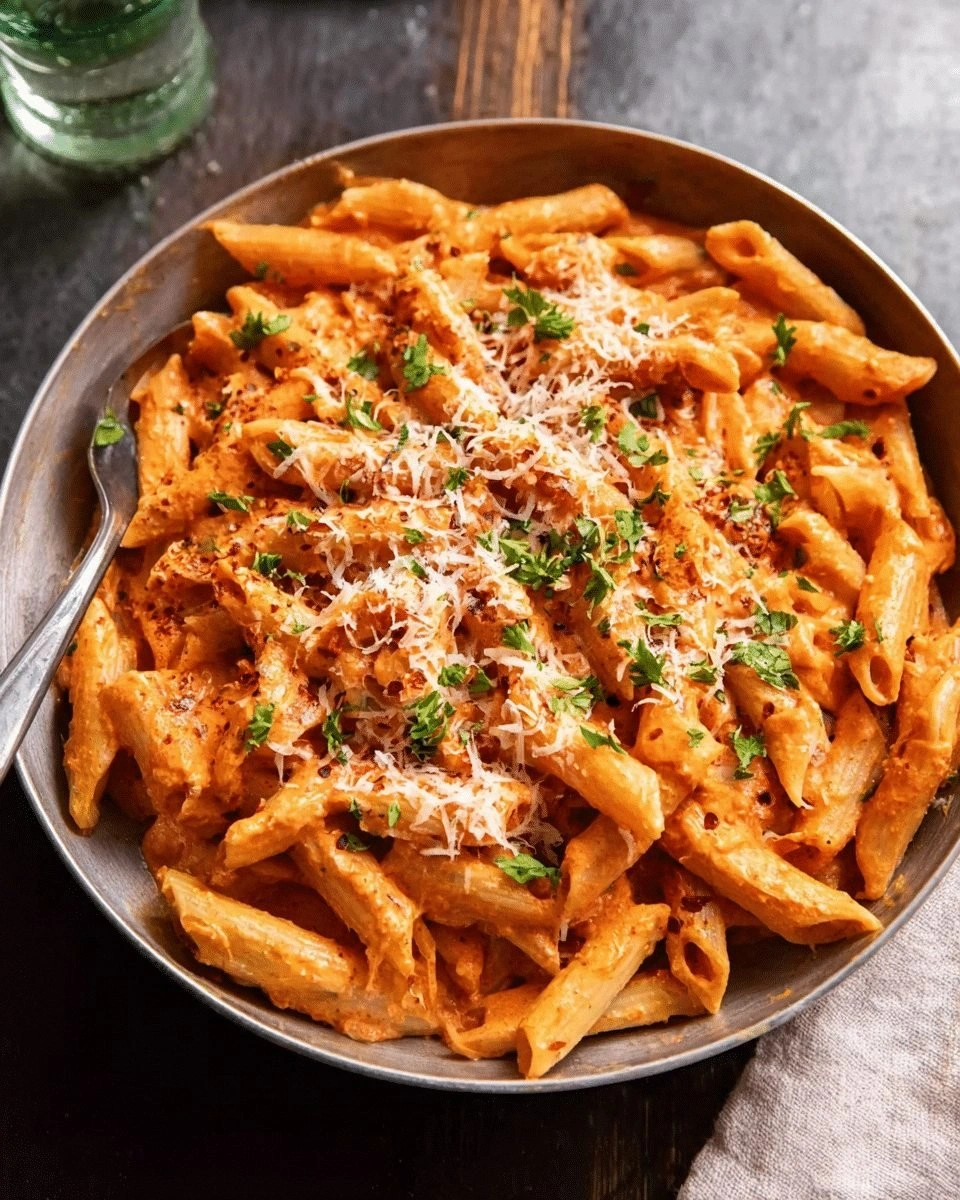
I was standing in my kitchen, the sink full of dishes, and a craving for something comforting hit me like a wave. The smell of tomatoes and garlic already began to pull me in, but the thought of a creamy, silky sauce that would coat each strand of penne like velvet kept me glued to the stove. I had tried a dozen versions of Penne alla Vodka over the years, and each one felt a little off—either too watery, too acidic, or missing that subtle warmth that makes a dish feel like home. That night, I decided to do a little experiment, to turn the classic into something that would make my taste buds sing and my friends ask, “How did you do that?”
Picture the kitchen in the late afternoon, the light filtering through the window, the sizzling of onions in olive oil, and the gentle hiss of vodka evaporating into the air. The aroma is a sweet, earthy invitation, and the sound of the pot bubbling is like a comforting lullaby. As the sauce thickens, the kitchen fills with the rich, tomato‑based perfume that makes you forget you’re even cooking. The texture of the sauce is silky, not thick, and it clings to the pasta with a gentle, almost buttery embrace. When you take a bite, the cream and tomato blend into a smooth, velvety mouthfeel that feels like a hug in every forkful.
This version stands out because it balances boldness with subtlety, and it’s built on a foundation that respects the integrity of each ingredient. The vodka isn’t just a splash; it’s a deliberate flavor enhancer that lifts the acidity of the tomatoes and adds a depth that you can’t get with water. The cream is added after the vodka has evaporated, ensuring the sauce stays light and airy rather than heavy. Fresh basil is added at the very end, keeping its bright, peppery notes alive. The result is a dish that feels restaurant‑quality but is entirely doable in a home kitchen.
And there’s a twist you won’t expect: a splash of heavy cream that’s been tempered with a bit of pasta water, giving the sauce a silky lift that doesn’t weigh you down. This technique keeps the sauce from separating, and it gives the penne that glossy, silky coat that makes the dish feel indulgent without the guilt. I dare you to taste this and not go back for seconds. Let me walk you through every single step — by the end, you'll wonder how you ever made it any other way.
What Makes This Version Stand Out
- Flavor Depth: The vodka acts as a subtle flavor enhancer, lifting the tomatoes and adding a gentle, aromatic note that makes the sauce feel more complex.
- Texture Control: By adding the cream after the vodka has evaporated, the sauce remains silky and light, avoiding the heavy, clumpy feel that can ruin a classic.
- Ingredient Quality: Using a high‑quality canned tomato and fresh basil gives the dish a bright, authentic taste that’s hard to replicate with lower‑grade ingredients.
- Time Efficiency: The method takes less than 45 minutes from start to finish, making it a perfect weeknight dinner without sacrificing flavor.
- Crowd Appeal: The dish is rich, comforting, and has that “restaurant‑style” feel that will impress guests at any gathering.
- Make‑Ahead Friendly: The sauce can be made ahead and reheated without losing its silky texture, thanks to the tempered cream technique.
- Versatile Variations: The base recipe can be easily tweaked with protein, veggies, or different cheeses, making it a playground for creativity.
- Balanced Nutrition: With 350 calories per serving, it’s a hearty meal that still feels indulgent without being overly heavy.
Alright, let's break down exactly what goes into this masterpiece…
Inside the Ingredient List
The Flavor Base
At the heart of the sauce is a simple yet powerful combination: diced onion, minced garlic, and a pinch of red pepper flakes. The onions soften and caramelize, giving the sauce a mellow sweetness that balances the acidity of the tomatoes. Garlic adds a punch of aroma, but be careful not to overcook it—burnt garlic will turn bitter. If you’re a fan of heat, increase the pepper flakes; if you’re more mild, leave them out entirely. A good rule of thumb is to sauté the aromatics until they’re just translucent, which usually takes about 3–4 minutes on medium heat.
The Creamy Core
Heavy cream is the secret to that silky finish, but it’s not just tossed in. The key is to let the vodka evaporate first, so the cream doesn’t dilute the alcohol’s subtle lift. Add the cream after the tomatoes have reduced, and let the sauce simmer gently for 5 minutes. The result is a sauce that’s rich yet airy, with a glossy sheen that makes every bite feel indulgent. If you’re watching calories, try substituting half-and-half or a low‑fat cream; the texture will change slightly, but the flavor will stay close.
The Pasta & Protein
Penne is the classic choice because its ridges and tubes trap sauce, delivering a burst of flavor with every forkful. Use a 1‑pound package for four servings—this ensures you have enough pasta to absorb the sauce without it becoming mushy. If you’re adding protein, shrimp or chicken works well. Cook the protein separately and fold it in at the end so it stays tender. For a vegetarian twist, add sautéed mushrooms or spinach for added texture and nutrients.
The Final Touches
Grated Parmesan is the finishing flourish that gives the sauce a nutty depth and a slightly salty edge. Add it after the pasta is tossed, letting the heat melt it into the sauce. Fresh basil or parsley sprinkled on top before serving adds a pop of color and a fresh, peppery aroma that lifts the dish. A squeeze of lemon juice can brighten the sauce, especially if you’re using a lot of cream. Finally, a dash of black pepper adds a subtle heat that ties the flavors together.
Everything's prepped? Good. Let's get into the real action…
The Method — Step by Step
- Bring a large pot of salted water to a rolling boil, then add the penne. Cook until al dente, about 8–10 minutes. Drain, reserving a cup of pasta water for later, and set the pasta aside. The pasta should still have a slight bite; it will continue cooking slightly in the sauce.
- While the pasta cooks, heat the olive oil in a large skillet over medium heat. Add the diced onion and sauté until translucent and fragrant, about 3–4 minutes. This is where the sauce’s foundation begins to build.
- Add the minced garlic to the pan, cooking for 1–2 minutes until it releases a bright aroma. The garlic should not brown; if it starts to turn golden, lower the heat. A small metal spoon in the pan keeps the mixture from sticking.
- Stir in the red pepper flakes, if using, and let them toast for 30 seconds. This step releases the flakes’ heat and infuses the oil with a subtle spice. Be careful not to let the flakes burn, or the sauce will taste bitter.
- Pour in the crushed tomatoes, bring the mixture to a gentle simmer, and let it reduce for about 10 minutes. The tomatoes should thicken slightly and develop a deeper flavor. The simmering also allows the onion and garlic to meld into the sauce.
- Add the vodka to the pan, stirring to combine. Let it simmer for 3–4 minutes, allowing the alcohol to evaporate and the sauce to deepen. The aroma will be intoxicating, but the heat will subside quickly. This step is crucial for the sauce’s characteristic brightness.
- Stir in the heavy cream, letting the sauce reduce for another 5 minutes. The sauce should thicken to a silky consistency that coats the pasta. If it becomes too thick, add a splash of reserved pasta water to loosen it.
- Toss the drained penne into the sauce, stirring to coat each tube. Add the grated Parmesan, letting it melt into the mixture. Stir until the sauce is glossy and the pasta is evenly coated. The Parmesan adds a nutty depth that rounds out the flavors.
- Garnish with fresh basil and a final sprinkle of Parmesan before serving. A squeeze of lemon juice can brighten the dish, especially if you’re using a lot of cream. Plate the pasta, serve hot, and enjoy the silky, tomato‑rich experience.
That's it — you did it. But hold on, I've got a few more tricks that'll take this to another level…
Insider Tricks for Flawless Results
The Temperature Rule Nobody Follows
Many people cook the sauce at high heat, which can cause the cream to curdle or the tomatoes to split. Instead, keep the sauce on low to medium heat once you add the cream. This gentle simmer preserves the sauce’s silky texture and keeps the flavors balanced. I once tried a high‑heat approach and ended up with a chunky, lumpy sauce that tasted like a failed attempt at a soup.
Why Your Nose Knows Best
As the sauce simmers, your nose will start to pick up on subtle changes. When the tomatoes reduce, the scent becomes richer and sweeter. If you notice a sharp, almost burnt aroma, the sauce is overcooked. Trust your olfactory senses; they’re a reliable indicator of doneness.
The 5-Minute Rest That Changes Everything
Letting the pasta sit in the sauce for five minutes before serving allows the sauce to thicken and the flavors to meld. During this rest, the pasta absorbs some of the sauce, making each bite more flavorful. A friend once served the dish immediately, and it felt thin. That short rest makes all the difference.
The Secret of the Creamy Finish
To achieve that velvety finish, temper the cream with a splash of pasta water before adding it to the pan. This step prevents the cream from separating when it hits the hot sauce. If you’re lactose intolerant, a splash of unsweetened almond milk can replace the cream while still providing a silky texture.
The Pasta‑Preserving Trick
When you drain the pasta, toss it with a teaspoon of olive oil to prevent sticking. This simple step keeps the noodles separate and easier to coat with sauce. It also helps the pasta stay al dente, preventing a mushy outcome.
The Final Touch That Elevates
A final sprinkle of freshly grated Parmesan before serving adds a burst of umami that completes the dish. If you like a bit of crunch, add a handful of toasted breadcrumbs on top. This contrast of textures turns a simple pasta into an unforgettable experience.
Creative Twists and Variations
This recipe is a playground. Here are some of my favorite ways to switch things up:
Creamy Mushroom Vodka Penne
Sauté sliced mushrooms with the onions and garlic for a meaty, earthy flavor. Add a splash of white wine to deglaze before the vodka. The mushrooms soak up the sauce, creating a hearty, vegetarian option that still feels indulgent.
Spicy Cajun Vodka Penne
Replace the red pepper flakes with a Cajun seasoning blend. Add diced bell peppers and a pinch of cayenne for extra heat. The Cajun spices give the dish a smoky, bold kick that pairs beautifully with the creamy sauce.
White Wine Vodka Penne
Swap the vodka for a dry white wine and reduce it before adding the tomatoes. The wine’s acidity balances the cream, while the vodka’s neutral profile lets the tomatoes shine. This version feels lighter but just as flavorful.
Vegan Vodka Penne
Use cashew cream or coconut milk in place of heavy cream for a dairy‑free option. Add sautéed spinach for extra nutrition. The vegan sauce still coats the pasta like velvet, but with a slightly nutty undertone.
Shrimp Vodka Penne
Cook peeled shrimp in a separate pan until pink, then fold them into the sauce at the end. The shrimp add a sweet, briny contrast to the creamy tomato base. Serve with a squeeze of lemon for brightness.
Pesto Vodka Penne
Stir a handful of basil pesto into the sauce before adding the cream. The pesto adds a fresh, herbaceous depth that complements the vodka’s subtle lift. This variation feels like a cross between a classic and a modern twist.
Storing and Bringing It Back to Life
Fridge Storage
Store the sauce and pasta separately in airtight containers for up to 3–4 days. Keep the sauce in a container with a tight lid to preserve its richness. When you’re ready to eat, combine the pasta and sauce, stir gently, and enjoy.
Freezer Friendly
The sauce freezes well for 2–3 months. Use a freezer‑safe container and leave a little headspace. When reheating, add a splash of water or milk to loosen the sauce, then warm gently on low heat.
Best Reheating Method
Reheat in a skillet over low heat, stirring frequently to prevent separation. Add a tablespoon of water or milk to achieve the desired consistency. Avoid microwaving, as it can cause the cream to curdle.