I still remember the night I tried to recreate that legendary pecan upside‑down cake I’d seen on a food blog. I was halfway through the batter, a half‑scoop of pecans on the counter, and the kitchen smelled like burnt sugar. My friend dared me to finish it and not taste it until it was out of the oven. I laughed, scooped the pecans into the pan, and said, “If I can’t finish this, I’ll never finish anything else.” That moment turned a simple dessert into an obsession.
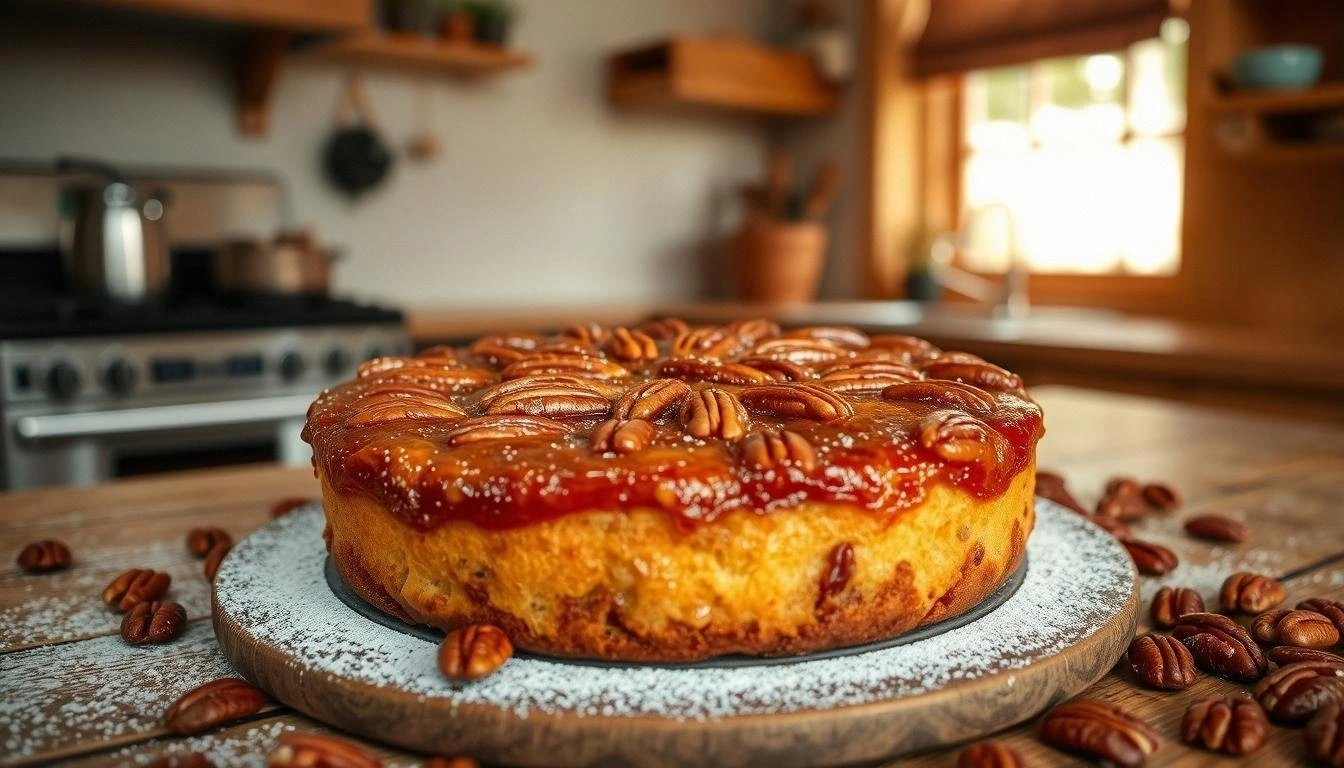
The first thing you notice is the glossy caramel layer, the way it glistens like a secret sunrise. As it bakes, the butter and sugar bubble and pop, filling the air with a sweet, buttery aroma that makes you want to close your eyes and breathe it in. The sound of the batter gently settling, the faint hiss as the pecans crackle, is a symphony that promises a crunchy, buttery bite. When you flip it, the pecans are perfectly caramelized, their edges crisping to a golden crunch that shatters like thin ice. The aroma that follows is a warm hug, a reminder of childhood holidays and Sunday afternoons.
What makes this version stand out is that it’s not just a cake; it’s a layered experience of textures and flavors that dance together. The batter is light, airy, yet dense enough to hold the caramelized pecan topping. The pecans themselves are toasted to bring out their nutty richness, then folded into the batter so each bite has that satisfying crunch. The caramel base is silky, not syrupy, thanks to the precise ratio of butter to sugar. The finish is a caramel‑peanut butter swirl that lingers on your palate, leaving you craving a second slice.
I’ve tried countless recipes that promise “the best” but fall short. Most forget the subtle balance of wet and dry ingredients, or they over‑bake the cake until it’s dry. This recipe, however, uses a specific technique—simmering the caramel until it’s just the right thickness, then cooling it enough to set before the batter is poured. The result is a cake that rises just enough to stay fluffy, yet doesn’t sink into the caramel. It’s a game‑changer that will make you question why you ever settled for anything else.
So if you’re ready to take your dessert game to the next level, let me walk you through every single step. By the end, you’ll wonder how you ever made it any other way. Picture yourself pulling this out of the oven, the whole kitchen smelling incredible, the first bite sending a wave of buttery, nutty bliss through your senses. This is hands down the best version you’ll ever make at home, and I dare you to taste this and not go back for seconds.
What Makes This Version Stand Out
- Taste: The caramelized pecans give a deep, buttery sweetness that cuts through the lightness of the batter. Each bite is a contrast between crunchy nuts and silky cake, creating a harmonious flavor profile.
- Texture: The batter is airy, thanks to the right balance of leavening agents, yet it holds the caramel layer perfectly. The pecans remain crisp, not soggy, because they’re toasted before folding.
- Simplicity: With only twelve ingredients, you’ll never feel overwhelmed. The method is straightforward, making it ideal for both beginners and seasoned bakers.
- Uniqueness: The technique of letting the caramel set before adding batter sets this recipe apart. It gives the cake a distinct structure and a caramelized finish that other recipes miss.
- Crowd Reaction: Friends and family rave about the cake’s show‑stopper presentation and the way the pecans caramelize to a golden finish. It’s a dessert that becomes the centerpiece of any gathering.
- Ingredient Quality: Using fresh pecans and high‑quality butter elevates the flavor. The recipe rewards you with a richer taste when you invest in better ingredients.
- Cooking Method: The upside‑down technique locks the caramel in place and creates a beautiful, glossy top. It’s a method that turns a simple cake into a culinary masterpiece.
- Make‑Ahead Potential: Once the caramel has set, you can pour the batter, bake, and store leftovers. The cake keeps well, and the pecans retain their crunch even after refrigeration.
Alright, let's break down exactly what goes into this masterpiece…
Inside the Ingredient List
The Flavor Base
At the heart of this cake lies a simple yet powerful combination of flour, leavening agents, and milk. The 1½ cups of all‑purpose flour provide the structure, while the 1 tsp baking powder and ½ tsp baking soda give it the lift it needs to rise without becoming too dense. The 1 cup of whole milk adds moisture and a subtle richness that pairs perfectly with the caramelized pecans. Together, these ingredients create a light, tender crumb that is the perfect canvas for the caramel topping.
The Sweet Layer
The caramel base is where the magic starts. 1 cup of brown sugar is melted with ½ cup of butter until it reaches a deep amber hue, then a splash of water is added to thin it just enough for it to spread evenly across the pan. The key is to simmer it just until it’s thick enough to coat the bottom of the pan without becoming syrupy. This layer becomes the sweet, buttery foundation that the cake rises upon, giving it that signature upside‑down finish.
The Texture Crew
Pecans are the star of the show. 1 cup of chopped pecans is folded into the batter, providing a crunchy bite in every slice. In addition, ½ cup of pecan halves is sprinkled on top before baking, ensuring that each portion has a caramelized, toasted pecan crust. The pecans not only add texture but also infuse the cake with a nutty aroma that’s impossible to resist.
The Final Flourish
Eggs and vanilla are the final touches that bind everything together. Two large eggs are whisked into the batter, ensuring moisture and structure. 1 tsp of vanilla extract brings a subtle floral note that balances the sweetness of the caramel. A pinch of salt (¼ tsp) is added to heighten the flavors, making the caramel and nuts pop. These final ingredients ensure that every bite is cohesive, balanced, and utterly delicious.
Everything's prepped? Good. Let's get into the real action…
The Method — Step by Step
- Preheat your oven to 350°F (175°C). Grease a 9‑inch round cake pan with butter and sprinkle a light dusting of flour to prevent sticking. This step ensures a clean release after baking. While the pan is getting ready, set the stage for the caramel by combining the brown sugar and melted butter in a small saucepan.
- Place the saucepan over medium heat and stir until the sugar dissolves completely. Allow the mixture to simmer for 4–5 minutes, watching for the color to deepen into a golden amber. Add a tablespoon of water to thin the caramel slightly; this helps it spread evenly across the pan. The aroma at this point should be intoxicating, promising a sweet, buttery finish.
- Pour the hot caramel into the prepared pan, swirling to cover the bottom evenly. Let it cool for a minute until it starts to set but remains pourable. Then sprinkle the ½ cup of pecan halves over the caramel, pressing them lightly so they’re fully coated. The pecans will caramelize as the cake bakes, creating a glossy, crunchy topping.
- In a separate bowl, whisk together the flour, baking powder, baking soda, and salt. This dry mix ensures that the leavening agents are evenly distributed, preventing any uneven rises. Set aside while you prepare the wet mixture.
- Beat the eggs in a medium bowl, then add the milk, melted butter (for the batter), vanilla, and a splash of water if the batter feels too thick. Whisk until the mixture is smooth and glossy. This is the moment of truth; the batter should flow like a silky river. Remember, the batter must be pourable but not runny.
- Fold the dry ingredients into the wet mixture gently using a rubber spatula, being careful not to deflate the batter. Then fold in the 1 cup of chopped pecans, ensuring even distribution. The batter should be thick but pourable; if it’s too thick, add a tablespoon of milk.
- Pour the batter over the caramel and pecan layer, smoothing the top with a spatula. The batter should cover the caramel completely, creating a seamless transition between the two layers. Place the pan in the preheated oven and bake for 30–35 minutes, or until a toothpick inserted into the center comes out clean.
- As the cake bakes, you’ll notice the edges pulling away from the pan, a sign that the cake is rising properly. The aroma will intensify, filling the kitchen with buttery, nutty sweetness. Once done, remove the cake from the oven and let it cool in the pan for 10 minutes. This short rest allows the caramel to set fully.
- Run a knife around the edges of the pan, then carefully invert the cake onto a serving plate. The caramel should coat the entire top, giving you that glossy, caramelized look. Slice and serve warm, optionally with a scoop of vanilla ice cream or a drizzle of maple syrup. Enjoy the burst of caramel, the crunch of pecans, and the airy cake in one bite.
That's it — you did it. But hold on, I've got a few more tricks that'll take this to another level…
Insider Tricks for Flawless Results
The Temperature Rule Nobody Follows
Many bakers bake at a high temperature, but that can cause the caramel to burn while the cake remains undercooked. The trick is to bake at 350°F (175°C), which allows the cake to rise evenly and the caramel to set just right. I’ve found that a slight reduction in temperature keeps the pecans from turning bitter. If you’re using a convection oven, lower the temperature by 25°F to avoid over‑baking.
Why Your Nose Knows Best
As the cake bakes, your nose will detect when the caramel has reached the perfect depth. It should smell like toasted sugar and butter, not burnt. If you notice a sharp, acrid smell, the caramel is overcooked. Trust your senses; a good baker never relies solely on the clock.
The 5‑Minute Rest That Changes Everything
After baking, letting the cake rest in the pan for 10 minutes is crucial. During this time, the caramel continues to set and the cake finishes its rise. Skipping this step can result in a cake that feels undercooked or a caramel that’s too runny. I always keep a timer handy to avoid rushing this part.
The Secret to Crispy Pecans
To avoid soggy nuts, toast them in a dry skillet over medium heat for 3–4 minutes before adding them to the batter. This step locks in moisture and enhances the nutty flavor. If you prefer a sweeter twist, toss the toasted pecans in a sprinkle of brown sugar before adding them to the batter.
The Final Flip: How to Serve Like a Pro
When flipping the cake, hold the plate firmly and lift the pan. The caramel should glide off smoothly, giving you a clean, glossy top. If you’re nervous, practice on a smaller batch first. Serve immediately to enjoy the caramel at its peak viscosity.
And there you have it—five insider tricks that guarantee a flawless, show‑stopping pecan upside‑down cake every time.
Creative Twists and Variations
This recipe is a playground. Here are some of my favorite ways to switch things up:
Maple‑Infused Caramel
Swap the water in the caramel for a splash of pure maple syrup. This adds a subtle, earthy sweetness that complements the pecans. The result is a richer, more complex flavor profile that feels like a holiday treat.
Chocolate‑Covered Pecans
Before adding the pecans to the batter, dip them in melted dark chocolate and let them set. The chocolate coating gives each bite a glossy, decadent finish. Pair it with a drizzle of chocolate ganache for a double‑layered indulgence.
Almond‑Laced Batter
Replace half of the all‑purpose flour with almond flour for a nutty undertone. The almond flour also adds a slight chewiness that contrasts beautifully with the crisp pecans. This variation is perfect for those who love a deeper nut flavor.
Citrus‑Zest Surprise
Add a teaspoon of lemon or orange zest to the batter for a bright, refreshing twist. The citrus cuts through the sweetness and adds a subtle zing. It’s a perfect balance for a summer gathering.
Salted Caramel Finish
Finish the cake with a drizzle of sea salt caramel sauce after flipping. The salt enhances the caramel’s sweetness and provides a savory counterpoint. This variation turns the cake into a sophisticated dessert that’s sure to impress.
Feel free to experiment and make this cake your own. The beauty of this recipe is its flexibility—you can turn it into a holiday centerpiece, a brunch treat, or a midnight snack.
Storing and Bringing It Back to Life
Fridge Storage
Wrap the cooled cake tightly in plastic wrap and then in foil. Store it in the refrigerator for up to 3 days. The caramel layer will stay moist, and the cake will maintain its airy texture. Before serving, let it sit at room temperature for 10 minutes to restore its softness.
Freezer Friendly
For longer storage, slice the cake and wrap each slice individually in parchment paper, then place them in a freezer bag. Freeze for up to 2 months. When ready to eat, thaw the slices overnight in the refrigerator and warm them in a 350°F oven for 10 minutes. The caramel will reheat beautifully, and the cake will regain its fluffy crumb.
Best Reheating Method
To reheat the entire cake, preheat your oven to 300°F (150°C). Place the cake on a baking sheet lined with parchment paper and bake for 15–20 minutes, or until warmed through. For a quick snack, microwave a slice on a plate for 20–30 seconds, but be careful not to overheat and dry it out. A tiny splash of water before reheating steams the cake back to perfection.