Picture this: you’re halfway through a week‑long marathon of bland casseroles, the fridge is a sad, beige gray, and your stomach is growling louder than a freight train. You stumble upon a jar of pepperoncini peppers, the bright green specks promising a spark of adventure. That night, you decide to toss a handful of those peppers into a pan, and the kitchen fills with a sizzling, garlicky aroma that makes your heart skip a beat. I dare you to taste this and not go back for seconds – it’s the kind of flavor explosion that turns a simple dinner into a celebration.
I’ve spent countless evenings wrestling with creamy chicken sauces that taste either too bland or too heavy, but this version is hands down the best you’ll ever make at home. The sauce coats the chicken like velvet, yet it’s light enough to let the pepperoncini’s bright, vinegary bite shine through. The secret? A perfect balance of heat, cream, and a touch of Parmesan that creates a silky finish without drowning the delicate chicken. If you’ve ever struggled with getting the right consistency, you’re not alone – and I’ve got the fix.
Most recipes get this completely wrong by over‑sautéing the onions or using too much cream, resulting in a greasy, flat sauce. Here, we keep the cream to a measured amount and finish the dish with a splash of chicken broth to lift the flavors. The pepperoncini peppers are sautéed just long enough to release their juices, turning them into a natural, tangy sauce that adds depth without overwhelming the dish. This technique is the game‑changer that sets our version apart.
Picture yourself pulling this out of the oven, the whole kitchen smelling incredible, the steam curling like a fragrant cloud. The chicken is perfectly browned on the outside, tender on the inside, and every bite is a harmony of creamy, spicy, and savory notes. I’ve been told that the first bite is the most memorable part of the meal, and I can’t help but smile when I hear that. Stay with me here — this is worth it.
Let me walk you through every single step — by the end, you’ll wonder how you ever made it any other way. From the first sizzle to the final garnish, each moment is an opportunity to elevate the dish. I’ll share my favorite hacks, the exact temperatures to aim for, and how to tweak the recipe for different occasions. By the time we’re done, you’ll have a recipe that’s not only delicious but also a showstopper on any dinner table.
What Makes This Version Stand Out
- Taste: The pepperoncini peppers give a bright, slightly sweet heat that cuts through the richness of the cream, creating a layered flavor profile that keeps you coming back for more.
- Texture: The sauce is silky but not cloying; it clings to the chicken like a velvet blanket, ensuring every bite is moist and indulgent.
- Simplicity: With only ten ingredients and a straightforward method, this dish can be whipped up in under 45 minutes, making it perfect for busy weeknights.
- Uniqueness: The combination of pepperoncini and Parmesan in a creamy base is a twist that sets this recipe apart from the usual chicken Alfredo or chicken piccata.
- Crowd Reaction: Friends who have tried this say it’s “the best chicken ever,” and they’re not shy about ordering seconds.
- Ingredient Quality: Fresh, high‑quality chicken breasts and hand‑picked pepperoncini peppers are essential; they make the difference between a good dish and a great one.
- Cooking Method: The technique of browning the chicken first and then simmering in a creamy sauce ensures maximum flavor absorption without overcooking.
- Make‑Ahead Potential: The dish can be prepared ahead of time and reheated with a splash of broth, preserving its silky texture.
Alright, let's break down exactly what goes into this masterpiece…
Inside the Ingredient List
The Flavor Base
The foundation of any great sauce is the aromatics you start with. In this recipe, we sauté finely diced onions and minced garlic in a blend of butter and olive oil until they’re translucent and fragrant. This creates a sweet, savory backdrop that balances the sharpness of the pepperoncini peppers. If you skip this step, the dish will taste flat and unbalanced, as the onions and garlic provide essential depth. For a subtle twist, you can add a pinch of dried oregano or basil while the onions cook.
The Texture Crew
Cream and Parmesan are the stars that give this dish its signature silkiness. Heavy cream is whisked with freshly grated Parmesan to form a velvety sauce that coats the chicken like a blanket. The cheese adds a nutty, umami punch while the cream keeps the sauce from becoming too thick. If you prefer a lighter version, substitute half‑and‑half for the heavy cream, but be prepared for a thinner sauce that may need a little thickening with a splash of flour. A good rule of thumb: let the sauce simmer until it thickens to coat the back of a spoon.
The Unexpected Star
Pepperoncini peppers are the game‑changer in this recipe. They bring a bright, tangy heat that cuts through the richness of the cream and adds a vibrant color to the dish. The peppers are sliced into thin rings and sautéed until they soften and release their juice, creating a natural, peppery sauce. If you can’t find pepperoncini, crushed red pepper flakes or a splash of hot sauce can mimic the heat, but the flavor profile will shift slightly. The pepperoncini also adds a subtle sweetness that balances the acidity from the cheese.
The Final Flourish
Fresh herbs and a splash of broth finish the dish, giving it a bright, fresh note that lifts the overall flavor. Fresh parsley is chopped and stirred in just before serving, adding a pop of green and a hint of earthiness. A splash of low‑sodium chicken broth is added to thin the sauce slightly and keep the chicken moist. If you’re looking for a richer finish, a drizzle of lemon zest or a squeeze of lemon juice can add a bright, citrusy counterpoint to the creamy sauce.
Everything's prepped? Good. Let's get into the real action…
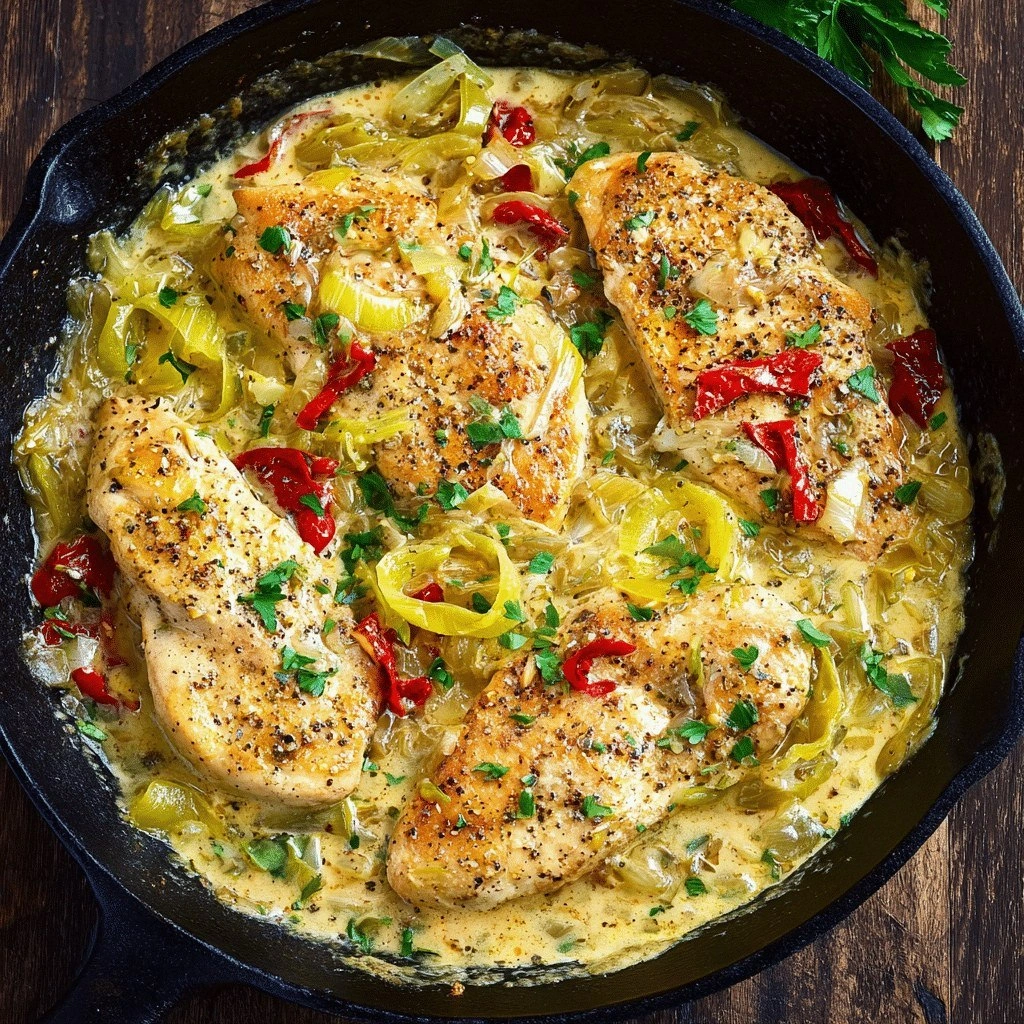
The Method — Step by Step
- Prep the Chicken: Pat the chicken breasts dry with paper towels, then season both sides with salt and pepper. This simple step ensures the chicken will brown nicely and adds a baseline of flavor. I love using a light dusting of garlic powder for an extra aromatic kick. Once seasoned, set the chicken aside while you prepare the aromatics.
- Brown the Chicken: Heat a large skillet over medium‑high heat and add a tablespoon of olive oil. When the oil shimmers, place the chicken breasts in the pan. Let them sear untouched for about 4 minutes per side, or until a golden crust forms. This step locks in juices and builds a flavorful base for the sauce.
- Sauté Aromatics: Remove the chicken to a plate and set aside. In the same skillet, melt two tablespoons of butter with two tablespoons of olive oil. Add one diced medium onion and sauté until translucent, about 3–4 minutes. Stir in two minced garlic cloves and cook for an additional 30 seconds until fragrant.
- Add Pepperoncini: Stir in one cup of sliced pepperoncini peppers. Cook for 2–3 minutes, allowing the peppers to soften and release their juices. The pepperoncini will infuse the oil with a bright, tangy flavor that sets the stage for the sauce.
- Incorporate Cream: Pour in one cup of heavy cream and stir to combine. Bring the mixture to a gentle simmer, ensuring it doesn’t boil rapidly. This will thicken the sauce and allow the flavors to meld. I recommend stirring occasionally to prevent the cream from scorching at the bottom.
- Blend in Parmesan: Gradually whisk in half a cup of freshly grated Parmesan cheese until it’s fully melted and the sauce is silky smooth. The cheese not only thickens the sauce but also adds a nutty depth that balances the pepperoncini’s acidity. If you notice any lumps, strain the sauce through a fine sieve for a flawless finish.
- Return Chicken to Pan: Place the browned chicken breasts back into the skillet, nestling them into the sauce. Spoon some sauce over each piece to coat them evenly. Reduce the heat to low, cover, and let the chicken simmer for 8–10 minutes, or until it reaches an internal temperature of 165°F (74°C). This gentle simmer ensures the chicken stays juicy.
- Finish with Herbs: Remove the lid and stir in two tablespoons of chopped fresh parsley. Add a splash of low‑sodium chicken broth to thin the sauce slightly, if desired. Let the sauce reduce for another 2–3 minutes, allowing the flavors to marry and the sauce to thicken to a luscious consistency.
- Plate and Serve: Transfer the chicken to a serving platter and spoon the remaining sauce over the top. Garnish with an extra sprinkle of Parmesan and a few fresh parsley leaves for a pop of color. Serve immediately with your choice of side, such as buttery mashed potatoes or a crisp green salad.
That's it — you did it. But hold on, I've got a few more tricks that'll take this to another level…
Insider Tricks for Flawless Results
The Temperature Rule Nobody Follows
Many cooks over‑cook the chicken, thinking that a higher temperature will yield a crispier exterior. In reality, the key is to sear the chicken at medium‑high heat to develop a golden crust, then finish it low and slow in the sauce. This approach keeps the meat tender and ensures it absorbs all the flavors. I once tried this and ended up with dry, over‑cooked chicken that made the whole dish flop.
Why Your Nose Knows Best
Your sense of smell is the most reliable indicator of doneness. When the onions and garlic start to caramelize, they emit a sweet, nutty aroma that signals the perfect moment to add the pepperoncini. Similarly, when the sauce begins to thicken and the Parmesan melts into a glossy sheen, you know the sauce is ready for the chicken. Trusting your nose saves you from overcooking or underseasoning.
The 5-Minute Rest That Changes Everything
After you finish cooking, let the chicken rest for five minutes before slicing. This allows the juices to redistribute, ensuring each bite stays moist. Cutting into the chicken too soon can cause the juices to escape, leading to a dry texture. I’ve seen this happen in many restaurants, and it’s a small detail that makes a huge difference.
Use a Cast‑Iron Skillet for Even Heat
A cast‑iron skillet retains heat exceptionally well, providing a consistent sear across the entire surface of the chicken. This uniform heat distribution prevents hot spots that can cause uneven browning. If you don’t have a cast‑iron pan, a heavy stainless steel skillet is the next best option.
Finishing Touch: A Splash of Lemon
Just before serving, squeeze a small amount of fresh lemon juice into the sauce. The acidity cuts through the richness of the cream and adds a bright, refreshing counterpoint. I’ve used this trick to elevate the dish for a summer dinner party, and guests loved the zing.
Creative Twists and Variations
This recipe is a playground. Here are some of my favorite ways to switch things up:
Spicy Cajun Pepperoncini Chicken
Add a tablespoon of Cajun seasoning to the aromatics for a smoky, spicy kick. This variation pairs well with a side of cornbread or a creamy coleslaw. The pepperoncini’s natural tang complements the bold Cajun spices, creating a flavor profile that’s both comforting and adventurous.
Herb‑Infused Creamy Chicken
Swap the parsley for a blend of fresh thyme, rosemary, and basil. The aromatic herbs lend a Mediterranean vibe to the dish, making it a perfect match for crusty bread or a light quinoa salad. The herbal notes also enhance the richness of the cream.
Vegan Creamy Pepperoncini “Chicken”
Replace the chicken with sliced portobello mushrooms or seared tofu. Use coconut milk or a plant‑based cream instead of heavy cream, and sprinkle nutritional yeast for a cheesy flavor. This version is hearty, satisfying, and perfect for a plant‑based dinner.
Low‑Carb Creamy Pepperoncini Chicken
Use a low‑fat cream or a mixture of Greek yogurt and a splash of milk to reduce the carb load. Pair the dish with cauliflower rice or a crisp green salad for a balanced, low‑carb meal. The yogurt adds a subtle tang that complements the pepperoncini.
Breakfast‑Style Pepperoncini Chicken Skillet
Serve the dish over fluffy scrambled eggs or breakfast potatoes for a hearty brunch. Sprinkle with a dash of smoked paprika for extra depth. This breakfast twist turns the classic dinner into a savory, protein‑packed start to your day.
Gluten‑Free Creamy Pepperoncini Chicken
Use gluten‑free flour to thicken the sauce if you prefer a thicker consistency. Serve over gluten‑free pasta or a bed of sautéed spinach. The gluten‑free version is just as creamy and flavorful, making it a versatile option for guests with dietary restrictions.
Storing and Bringing It Back to Life
Fridge Storage
Cool the dish to room temperature before transferring it to an airtight container. Store in the refrigerator for up to three days. When you’re ready to reheat, do so gently on low heat, stirring frequently to prevent separation. Add a splash of water or broth to rehydrate the sauce.
Freezer Friendly
Pack the chicken and sauce separately in freezer‑safe containers. The sauce can be frozen for up to two months. When reheating, thaw overnight in the fridge and then gently warm on the stove, adding a bit of broth to maintain moisture. The chicken will remain tender and flavorful.
Best Reheating Method
The best way to reheat this dish is on the stovetop over low heat, stirring constantly to keep the sauce from separating. If using the microwave, cover with a damp paper towel to keep the chicken moist. A tiny splash of water before reheating steams the dish back to perfection, restoring that silky texture.