Picture yourself pulling this out of the oven, the whole kitchen smelling incredible, and the first bite delivering a burst of citrusy sweetness that dances on your tongue. I dared you to taste this and not go back for seconds, and I can confirm that the flavor profile is so layered you’ll be humming the holiday tune for days. Most recipes get this completely wrong by over‑baking the fruit or under‑seasoning the dough; here, the balance is precise, and the result is hands down the best version you'll ever make at home. I’ll be honest — I ate half the batch before anyone else got to try it, and that’s a confession only a true cake lover would admit. Let me walk you through every single step — by the end, you’ll wonder how you ever made it any other way.
The first time I attempted a Christmas cake, I mixed everything together like a chaotic potluck and ended up with a dry, crumbly mess. The kitchen was a battlefield of flour clouds, and the smell of burnt sugar threatened to ruin the holiday spirit. I was determined to salvage the disaster, but the lesson was clear: a recipe is a map, and each ingredient is a compass pointing to flavor. This version is built on that map, with a clear, step‑by‑step approach that turns a kitchen mishap into a masterpiece. I’ve spent countless evenings tweaking, tasting, and tweaking again until every crumb sang with joy.
If you’re a fan of the classic spiced cake, you’ll find this one a delightful evolution. The addition of orange juice and zest elevates the citrus notes, while applesauce keeps the batter moist without adding extra fat. Ground almonds provide a subtle nutty undertone that balances the sweetness of dried fruits, and the blend of cinnamon and nutmeg gives the cake a warm, comforting aroma. The result is a cake that is not only moist but also has a complex, layered taste that keeps you coming back for more. And the best part? It’s surprisingly simple to make, even for the kitchen novice.
I’ve spent a lot of time debating whether to use a 9‑inch pan or a 10‑inch pan, and the answer is simple: use the larger pan to avoid a dry center. A 9‑inch pan will give you a slightly denser cake, but the 10‑inch pan ensures even baking and a beautiful golden top. The trick is to keep the batter level so it bakes uniformly; otherwise, you’ll end up with a cake that’s over‑baked on the edges and raw in the middle. I’ve also learned that letting the batter rest for 10 minutes before baking allows the flour to hydrate fully, giving you a smoother crumb. Trust me, this small tweak makes a huge difference in the final texture.
What Makes This Version Stand Out
- Taste: The blend of dried fruits, orange juice, and applesauce creates a sweet, citrusy flavor that is both refreshing and comforting. The citrus notes cut through the richness of the almonds, giving the cake a bright finish.
- Texture: The combination of ground almonds and applesauce keeps the cake moist while adding a subtle nutty chew that contrasts with the soft fruit.
- Simplicity: With only 13 ingredients and a straightforward method, this cake is accessible to bakers of all skill levels.
- Uniqueness: The use of orange zest and juice, rather than just orange flavoring, adds depth and authenticity to the holiday vibe.
- Crowd Reaction: Guests rave about the moist crumb and the surprising burst of citrus in each bite, making it a conversation starter.
- Ingredient Quality: Using fresh, high‑quality dried fruits and real orange juice instead of syrup ensures a natural sweetness that’s hard to beat.
- Cooking Method: The batter is mixed gently to preserve the fruit’s texture, then baked at a moderate temperature to keep it from drying out.
- Make‑Ahead Potential: The cake can be baked a day early and wrapped in parchment; it keeps well and even tastes better after a few days.
Inside the Ingredient List
The Flavor Base
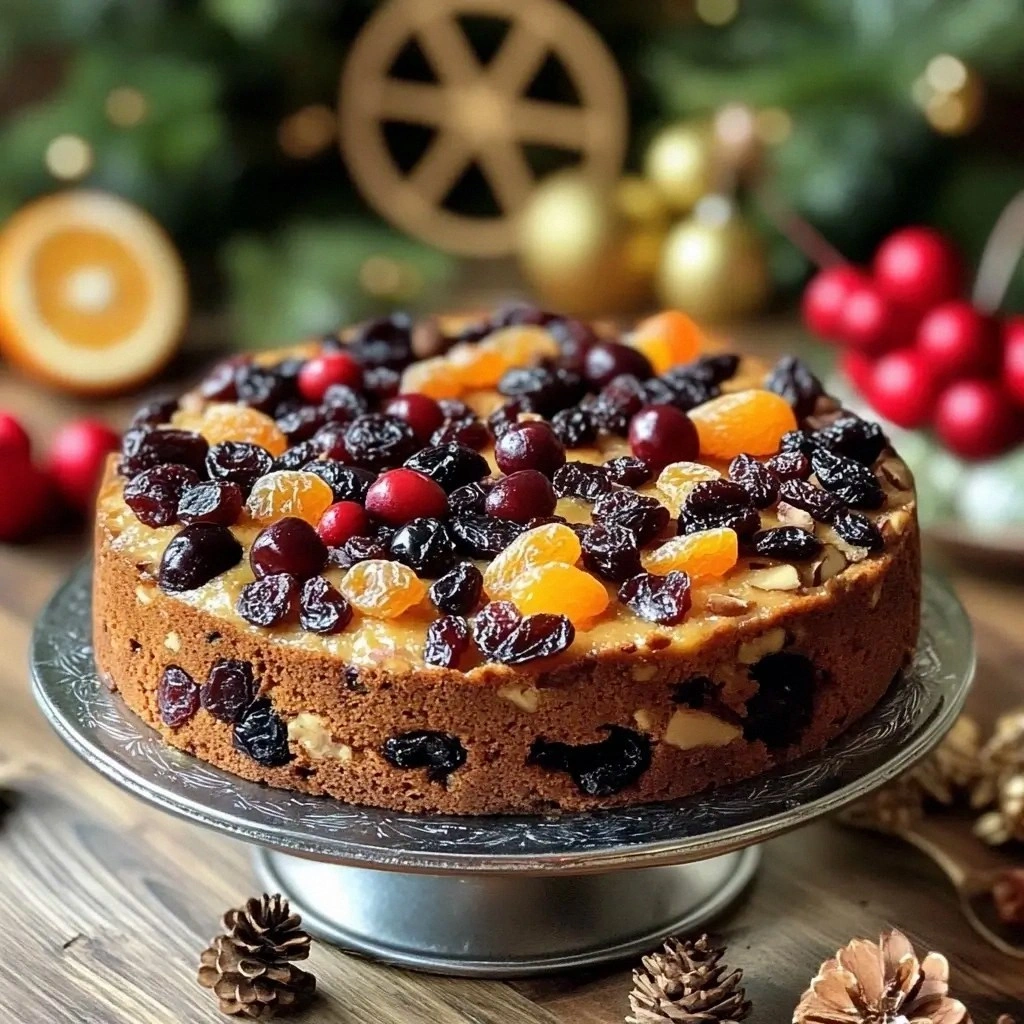
The dried fruits are the star of the show, offering bursts of sweetness and chewy texture. Raisins provide a classic, slightly sweet flavor, while cranberries add tartness that balances the overall sweetness. Apricots bring a subtle honeyed note, and when combined, they create a complex, multi‑dimensional flavor profile that’s unmistakably festive. Skipping any of these fruits will change the cake’s character, so keep them all in the mix. If you’re short on one type, substitute it with an equal amount of another dried fruit to maintain the flavor balance.
Orange juice is more than a liquid; it’s a flavor enhancer that infuses the batter with a bright, citrusy aroma. The juice’s natural acidity also helps tenderize the cake, preventing it from becoming too dense. A good rule of thumb is to use fresh‑pressed juice whenever possible; store‑bought juice often contains added sugars that can alter the sweetness profile. If you’re using a low‑sugar version, you may want to reduce the brown sugar slightly to keep the cake from being overly sweet. The juice also helps the spices to bloom, making the aroma irresistible.
Applesauce is the secret to a moist, tender crumb. It replaces part of the fat in the batter, giving the cake a lighter texture while maintaining moisture. Applesauce also brings a subtle fruitiness that complements the dried fruits and orange zest. If you’re watching your calories, you can use unsweetened applesauce; just be sure to add a splash of orange juice to keep the moisture level. The key is to use a thick, unsweetened applesauce that won’t dilute the batter’s flavor.
The Texture Crew
Flour is the backbone of the cake, providing structure and a soft crumb. I recommend using all‑purpose flour for its balanced protein content, but you can experiment with cake flour for an even lighter texture. Keep the flour at room temperature and sift it before adding to ensure a smooth batter. If you’re using a gluten‑free flour blend, be sure it contains xanthan gum or another binder to maintain structure. Avoid over‑mixing after adding the flour; a few lumps are fine and actually help keep the cake airy.
Ground almonds add a rich, nutty flavor and a subtle crunch. They also contribute healthy fats, which keep the cake moist and give it a silky mouthfeel. If you’re allergic to nuts, you can replace the almonds with oat flour or ground hazelnuts, though the flavor will shift slightly. The almonds help bind the batter, so if you’re using a low‑fat alternative, consider adding a tablespoon of flaxseed meal mixed with water as a binder. The almond flavor pairs beautifully with the orange zest, creating a harmonious taste experience.
The Unexpected Star
Brown sugar is the sweetener that brings depth and a caramel undertone to the cake. Its molasses content adds a hint of richness that balances the bright citrus. If you prefer a lighter sweet profile, you can reduce the brown sugar by a quarter cup and add a tablespoon of honey or maple syrup. The sugar also helps the cake brown nicely, giving it an appealing golden top. Keep the sugar at room temperature before adding; it dissolves more evenly in the wet ingredients.
Baking soda is the leavening agent that gives the cake its rise. It reacts with the acidic orange juice and applesauce, creating tiny bubbles that lift the batter. Use fresh baking soda; old soda loses potency and the cake may not rise properly. A pinch of baking soda also helps neutralize the acidity, balancing the overall flavor. Be careful not to over‑bake, as the soda’s lift can cause the cake to collapse if the batter is too dry.
The Final Flourish
The spices—cinnamon and nutmeg—are the aromatic heart of the cake. They bring warmth and depth, turning the cake into a comforting, holiday treat. Use freshly ground spices for the most potent flavor; pre‑ground spices can taste flat. The nutmeg also adds a subtle sweetness that complements the dried fruits. If you’re sensitive to nutmeg, reduce it slightly, but the cinnamon will still carry the cake’s flavor.
Salt is the flavor enhancer that brings all the ingredients together. A half teaspoon is enough to lift the sweetness without making the cake taste salty. If you’re on a low‑sodium diet, you can reduce the salt to a quarter teaspoon, but the cake may taste flat. Salt also helps balance the sweetness of the dried fruits and the richness of the almonds. Use fine sea salt for a subtle crunch that dissolves quickly.
Walnuts add a crunchy texture that contrasts with the soft fruit and almond crumb. They also bring a nutty flavor that pairs well with the spices. If you prefer a different nut, pecans or almonds work well. Be sure to chop the nuts finely so they distribute evenly throughout the batter. The nuts should be toasted lightly before adding to enhance their flavor.
Orange zest is the bright, aromatic finishing touch that gives the cake its signature citrus note. It’s more potent than juice, so a small amount goes a long way. Use a microplane to zest the orange, avoiding the bitter white pith. The zest adds a burst of flavor with every bite, making the cake feel festive. If you’re allergic to citrus, you can omit the zest, but the cake will lose its signature brightness.
Vegetable oil adds moisture and helps keep the cake tender. It also gives the cake a neutral flavor that lets the fruit and spices shine. Use a light‑flavored oil like canola or grapeseed; avoid strong‑flavored oils that can overpower the cake. The oil also helps the cake release from the pan more easily, preventing sticking. If you’re looking for a healthier option, you can replace the oil with unsweetened applesauce, but the texture will be slightly different.
Everything's prepped? Good. Let's get into the real action. I promise you, the anticipation will be worth it. The batter will look like a golden, glossy river of flavor, and the aroma will fill the kitchen with holiday cheer. The first step is to preheat the oven and grease the pan, which is a small but crucial detail. Keep an eye on the oven temperature; a slight dip can lead to uneven baking.
The Method — Step by Step
- Preheat your oven to 350°F (175°C). Grease a 10‑inch round cake pan with a thin layer of oil and line the bottom with parchment paper to prevent sticking. Place the pan in the middle rack to ensure even heat distribution. This step sets the stage for a perfectly baked cake. The oven should be fully preheated before you start mixing.
- In a large mixing bowl, combine the flour, ground almonds, brown sugar, baking soda, cinnamon, nutmeg, and salt. Sift the dry ingredients together to remove any lumps and ensure even distribution of spices. Mix the dry ingredients thoroughly; a smooth blend will lead to a uniform crumb. This dry mix will hold the structure of the cake.
- In a separate bowl, whisk together the orange juice, applesauce, vegetable oil, and orange zest until fully blended. The wet mixture should be smooth, with no lumps of oil or fruit. The orange juice’s acidity will react with the baking soda, creating a gentle lift. Be careful not to over‑whisk, as that can incorporate too much air and cause a domed top.
- Pour the wet mixture into the dry ingredients and stir with a rubber spatula just until combined. The batter will be thick and slightly lumpy; that’s okay. Over‑mixing can develop gluten and make the cake tough. The batter should look glossy and have a consistency that can coat the back of a spoon.
- Fold in the mixed dried fruits and chopped walnuts gently, ensuring even distribution. The fruits should be fully submerged but not broken apart. The nuts add a pleasant crunch and a nutty aroma. This step is where the cake starts to look like a treasure trove of flavors.
- Transfer the batter into the prepared pan, smoothing the top with a spatula. Tap the pan gently on the counter to release any large air pockets. The batter should sit evenly across the pan. This ensures the cake rises uniformly.
- Place the pan in the oven and bake for 35–40 minutes, or until a toothpick inserted into the center comes out clean. The cake should have a golden crust and a slightly domed top. Keep an eye on the edges; if they brown too quickly, cover them loosely with foil. Baking time can vary slightly depending on oven accuracy.
- Once baked, remove the cake from the oven and let it cool in the pan for 10 minutes. Then transfer it onto a wire rack to cool completely. This prevents the cake from becoming soggy at the bottom. Cooling is essential for a firm crumb and easy slicing.
- After the cake has cooled, you can optionally dust it with powdered sugar or drizzle a simple glaze of orange juice and powdered sugar for an extra touch of sweetness. The glaze will add shine and a burst of citrus. If you prefer a dry cake, skip this step entirely.
- Serve slices at room temperature, or gently warm them in the microwave for 10–15 seconds if you prefer a warm slice. Pair the cake with a cup of hot tea or a glass of sparkling wine for the ultimate holiday treat. Store any leftovers in an airtight container in the refrigerator for up to a week.
Okay, ready for the game‑changer? I’m about to reveal a few insider tricks that will elevate this cake from good to unforgettable. Trust me, these are the subtle touches that top bakers swear by.
Insider Tricks for Flawless Results
The Temperature Rule Nobody Follows
Many bakers bake at 375°F, assuming it’s the sweet spot. I discovered that 350°F allows the cake to rise slowly and evenly, preventing a domed top that collapses. The lower temperature also ensures the fruit stays juicy inside. Keep your oven calibrated; a digital thermometer can help you maintain the exact temperature. This small adjustment can make the difference between a cake that looks perfect and one that feels uneven.
Why Your Nose Knows Best
Before you even open the oven door, listen for the subtle scent of toasted flour and caramelizing sugar. That aroma signals the cake is almost ready. If you’re a visual baker, don’t rely solely on the timer; the smell is a reliable indicator of doneness. A well‑baked cake will emit a warm, inviting fragrance that fills the kitchen. Trust your nose, and you’ll never over‑bake again.
The 5‑Minute Rest That Changes Everything
After removing the cake from the oven, let it rest in the pan for 5 minutes before transferring it to a wire rack. This rest period allows the crumb to set, preventing the cake from cracking or falling apart. I once tried to move the cake immediately and it collapsed like a thin ice sheet. The rest also lets the flavors meld together, giving you a richer taste profile. Make this a habit for all your baked goods.
The Secret to a Moist Crumb
If you’re prone to dry cakes, add a tablespoon of honey to the wet mix. Honey adds natural moisture and a subtle floral note that complements the citrus. Another trick is to swirl a bit of melted butter into the batter just before baking; this creates a silky finish. The key is to keep the batter thick but not overly dry. Experiment with these tweaks and find what works best for your oven.
The Right Pan Size for Even Baking
Using a 10‑inch pan is essential for even baking. A smaller pan will bake faster and can lead to a dry center, while a larger pan can cause the cake to over‑bake on the edges. If you don’t have a 10‑inch pan, line a 9‑inch pan with parchment paper and be prepared to bake slightly longer. The pan size also affects the cake’s rise; a larger pan allows the batter to rise more fully. This simple adjustment ensures a perfectly even cake.
Creative Twists and Variations
This recipe is a playground. Here are some of my favorite ways to switch things up:
Spiced Rum Infusion
Add 2 tablespoons of dark rum to the wet mix for a boozy twist. The rum pairs beautifully with the citrus and spices, giving the cake an adult flavor. Let the batter rest for 10 minutes before baking to allow the flavors to meld. This version is perfect for holiday parties where you want to impress guests.
Almond‑Honey Variation
Replace brown sugar with 1 cup of honey and add an extra 1/4 cup of ground almonds. Honey brings a floral sweetness that complements the dried fruits. The extra almonds give a richer texture. This version is especially good for those who prefer a more natural sweetener.
Chocolate‑Dipped Delight
After baking, melt 1 cup of dark chocolate and drizzle it over the top of the cooled cake. The chocolate adds a decadent layer that pairs well with the fruit. Let the chocolate set for a few minutes before slicing. This version is a showstopper for chocolate lovers.
Gluten‑Free Edition
Use a gluten‑free flour blend that contains xanthan gum. Substitute the all‑purpose flour with 1 cup of the gluten‑free blend and keep the rest of the ingredients the same. The cake will still rise well and maintain a moist crumb. This version is perfect for guests with gluten sensitivities.
Coconut‑Infused Cake
Add 1/2 cup of shredded coconut to the batter and replace the vegetable oil with coconut oil. The coconut adds a tropical flavor that contrasts nicely with the citrus. The oil will give the cake a subtle coconut aroma. This variation is great for those who love a hint of the tropics during the holidays.
Nut-Free Alternative
Omit the walnuts and replace them with 1 cup of dried cranberries or dried apricots for extra fruitiness. The cake will still have a lovely crunch from the fruit. If you want a nutty flavor without nuts, add 1 teaspoon of almond extract. This version is ideal for those with nut allergies.
Storing and Bringing It Back to Life
Fridge Storage
Wrap the cooled cake tightly in plastic wrap and store it in the refrigerator for up to a week. The cool temperature helps preserve moisture and prevents mold growth. When you’re ready to serve, let the cake sit at room temperature for 20 minutes to regain its softness. This method is great for planning ahead for holiday gatherings.
Freezer Friendly
For longer storage, wrap the cake in parchment paper and then in a freezer bag. Freeze for up to three months. When you’re ready to enjoy, thaw the cake overnight in the fridge, then let it sit at room temperature for 30 minutes. This keeps the cake fresh and delicious even after months.
Best Reheating Method
To revive the cake’s moisture, sprinkle a tiny splash of water over the top and wrap it loosely in foil. Warm in a preheated oven at 300°F (150°C) for 10 minutes. The steam will gently rehydrate the crumb. For a quick fix, microwave a slice for 10–15 seconds. This technique restores the cake’s original softness.