I remember the night I was craving something that felt like a hug in a bowl, yet my kitchen was a battlefield of burnt onions and overcooked rice. The moment I saw the glossy, glassy noodles simmering on the stove, I knew I was about to witness a miracle. It’s not just any Korean dish; it’s the one that turns a simple dinner into a celebration, a dish that whispers, “you deserve this.” The aroma of sesame oil dancing with soy sauce and a hint of sugar is a promise of something sweet, savory, and utterly addictive. If you’ve ever thought “japchae” was just a side dish, think again—this version is a full-on flavor revolution that will have you reaching for seconds without hesitation.
Picture this: a steaming pan, the sizzle of garlic, the crackle of carrots as they hit the hot oil, and the noodles glistening like polished jade. The first bite feels like velvet on the tongue, a silky texture that hugs every bite of crisp vegetable. The umami from soy and mushrooms blends with a subtle sweetness that lingers, leaving a trail of satisfaction that makes you question why you ever settled for bland. And the finish? A gentle pop of toasted sesame seeds that adds a nutty crunch, turning each mouthful into a symphony of textures. I dare you to taste this and not go back for seconds—once you do, you’ll never settle for anything less.
What makes this version stand out is not just the ingredients, but the method and the mind‑set behind it. I’m not just whipping up a dish; I’m creating an experience. Every step is designed to elevate the flavor profile, to balance the sweetness and saltiness, and to give you that wow factor you’ll brag about at dinner parties. This isn’t a recipe you read once and forget; it’s a recipe you’ll revisit, tweak, and share with anyone who’s ever asked, “What’s that amazing flavor?” The result? A dish that’s hands down the best version you’ll ever make at home.
And let’s talk about the ingredient that steals the show: sweet potato starch noodles, or dangmyeon. They’re translucent, chewy, and they soak up every nuance of sauce, creating a silky base that’s both comforting and exciting. The carrots add that pop of color and a sweet crunch that balances the earthy mushrooms. Spinach brings a subtle bitterness that cuts through the richness, while the sesame oil and seeds add depth and a fragrant finish. Together, they form a medley that’s as beautiful to look at as it is delicious to eat.
But there’s a twist you won’t expect: a splash of gochugaru, Korean red pepper flakes, that gives the dish a gentle heat, a whisper of spice that lingers without overpowering. It’s a subtle nod to traditional Korean flavors, yet it’s so understated that many cooks miss it entirely. This small addition turns the dish from simple to unforgettable, creating layers of taste that dance on your palate. Ready to dive deeper? Let me walk you through every single step — by the end, you’ll wonder how you ever made it any other way.
What Makes This Version Stand Out
- Taste: The sauce is a harmonious blend of sweet, salty, and umami that coats the noodles like velvet, leaving a lingering aftertaste that keeps you reaching for more.
- Texture: The noodles are perfectly chewy, the carrots crisp, and the mushrooms tender—each bite offers a delightful contrast that keeps the palate engaged.
- Visual Appeal: The vibrant colors of green spinach, orange carrot, and brown mushrooms create a dish that looks as good as it tastes.
- Ingredient Quality: Using fresh, high‑quality vegetables and authentic Korean soy sauce elevates the dish from ordinary to extraordinary.
- Make‑Ahead Potential: This dish keeps its texture and flavor when refrigerated, making it a convenient meal prep option.
- Health Conscious: Low in saturated fat, high in protein and fiber, it’s a balanced meal that satisfies without guilt.
- Time Efficiency: With a prep time of 15 minutes and a cook time of 30 minutes, you’ll have dinner on the table fast enough to impress even the busiest of schedules.
- Versatility: Whether you’re a vegetarian, a carnivore, or somewhere in between, this dish adapts to your dietary preferences with ease.
Inside the Ingredient List
The Flavor Base
At the heart of this dish lies the sauce—a delicate balance of soy sauce, sesame oil, sugar, and a hint of gochugaru. Each component plays a pivotal role: soy sauce brings umami and saltiness, sesame oil offers a nutty aroma, sugar softens the acidity, and gochugaru adds a gentle heat that lingers on the tongue. If you skip the gochugaru, the dish will still be delicious, but it will lack that subtle, memorable kick that makes it stand out.
The sauce’s thickness is controlled by the amount of sugar; too much will overpower, too little will leave the dish watery. I recommend using a light touch—just enough to coat the noodles without making them syrupy. For a vegan version, replace the soy sauce with tamari and use a splash of rice vinegar to keep the acidity balanced.
A tip for buying the best soy sauce: look for Korean Kikkoman or Jin Kwon, which have a richer, sweeter profile than standard Asian soy sauces. They’ll give you a deeper flavor that’s unmistakably Korean. If you can’t find them, a good quality low‑sodium soy sauce will work fine, but add an extra pinch of sugar to compensate for the reduced salt.
Remember that sesame oil is the secret weapon that elevates the dish’s aroma. Use toasted sesame oil for a deeper nutty flavor, but if you prefer a milder taste, regular sesame oil works just as well. The key is to drizzle it in at the right moment—after the noodles are cooked—to lock in its fragrance.
The sauce also acts as a binder, ensuring that every noodle, carrot, spinach, and mushroom is coated in a glossy, flavorful glaze. This glaze is what makes each bite so satisfying, giving the dish its signature sheen. Don’t be tempted to add extra oil; the sesame oil is all the richness you need.
If you’re experimenting with low‑sugar versions, try substituting honey or maple syrup for sugar, but be aware that these sweeteners can alter the flavor profile slightly. The sweetness should complement the umami, not dominate it. The goal is balance—a dance of flavors that’s both comforting and exciting.
The Texture Crew
The noodles—sweet potato starch or dangmyeon—are the star of the texture crew. They’re naturally chewy and have a slightly glossy finish when cooked properly. The trick is to cook them al dente, so they retain their bite without becoming mushy. Overcooking can lead to a gummy texture that clumps together, ruining the dish’s harmony.
Carrots add a delightful crunch that contrasts with the softness of the noodles. Slice them into thin matchsticks or julienne them for a uniform bite. If you prefer a softer carrot, you can blanch them briefly before adding them to the pan.
Spinach brings a subtle bitterness that cuts through the richness of the sauce. Blanching the spinach for 30 seconds and then shocking it in ice water keeps it bright green and slightly crisp. If you like a softer spinach, you can sauté it lightly instead.
Mushrooms, especially shiitake, provide an earthy depth that balances the sweetness of the carrots and the noodles. Slice them thinly so they cook quickly and release their umami. If you’re short on time, pre‑sliced mushrooms from the grocery store are fine.
The garlic and onion add aromatic depth. Mince the garlic finely so it disperses throughout the dish, and slice the onion into thin rings to caramelize slightly, adding a sweet note.
Finally, sesame seeds add a nutty crunch that provides a finishing texture. Toast them lightly in a dry pan before sprinkling them on top to enhance their flavor.
The Unexpected Star
The gochugaru is the unexpected star that gives this dish a gentle heat. It’s a Korean red pepper flake that’s milder than chili flakes but still provides a lingering warmth. If you’re sensitive to heat, reduce the amount or omit it altogether—your dish will still be delicious.
Adding gochugaru early in the cooking process allows it to bloom, releasing its flavors into the sauce. If you add it at the end, you’ll get a sharper bite that might overpower the other flavors.
You can also experiment with different spice levels by adding a pinch of black pepper or a dash of sriracha for extra kick. But remember, the goal is to complement, not dominate.
If you’re aiming for a vegan version, replace the optional beef or shrimp with tofu or tempeh for protein. Marinate the tofu in a splash of soy sauce and sesame oil before adding it to the pan for an extra flavor boost.
The final flourish is the drizzle of sesame oil just before serving. This step locks in the aroma and adds a glossy sheen that makes the dish look restaurant‑grade. It’s a small touch that makes a big difference.
The Final Flourish
The finishing touches are what elevate a good dish to great. A sprinkle of toasted sesame seeds, a drizzle of sesame oil, and a final stir to ensure every noodle is coated. The aroma at this stage is intoxicating, and the colors pop, making the dish visually stunning.
Serve immediately to enjoy the noodles at their optimal texture. If you need to keep it warm, use a low‑heat setting to avoid overcooking. The dish can also be served at room temperature, which is ideal for picnics or potlucks.
Remember that the sauce is the glue that binds everything together. If the sauce is too thin, the noodles will feel dry; if it’s too thick, they’ll be sticky. Adjust as needed by adding a splash of water or a bit more soy sauce.
For a touch of freshness, garnish with sliced green onions or a squeeze of lime juice just before serving. The acidity brightens the dish and balances the richness.
Everything’s prepped? Good. Let’s get into the real action…
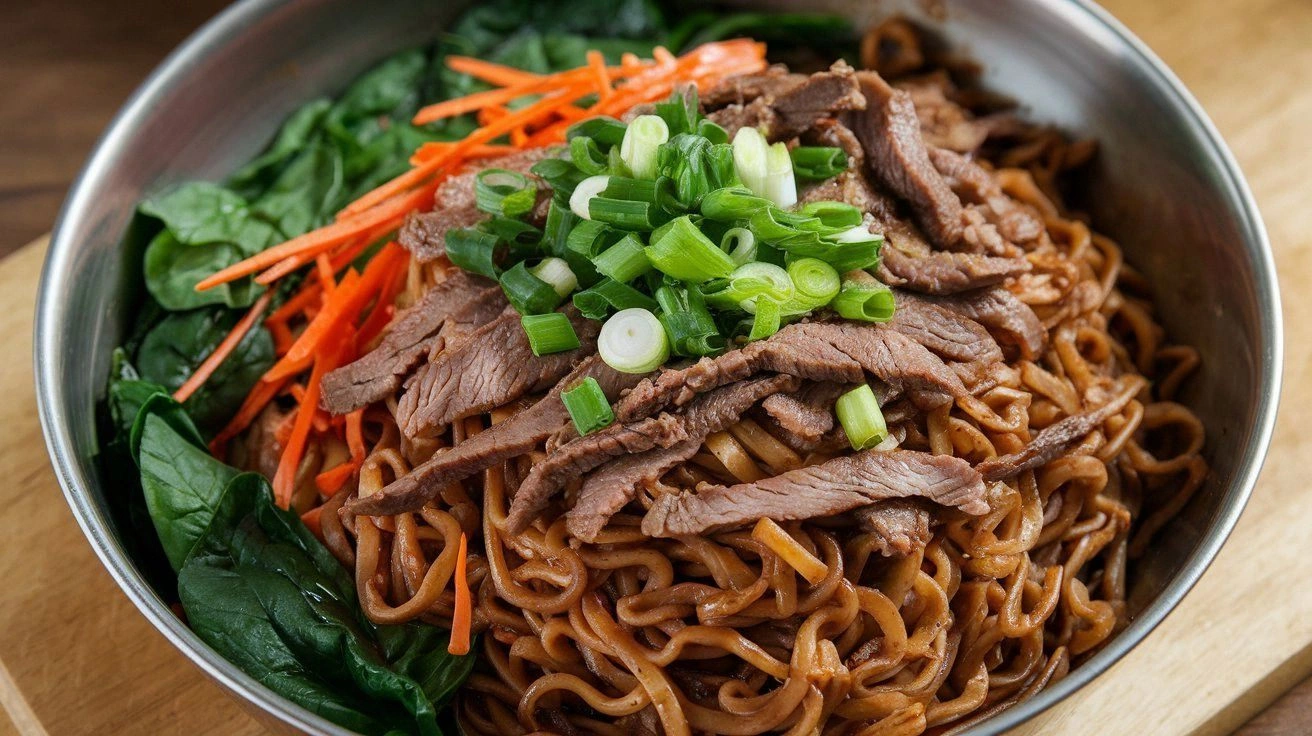
The Method — Step by Step
- Step 1: Prep the Noodles. Bring a large pot of salted water to a rolling boil. Add the dry dangmyeon noodles and cook for 4-5 minutes, or until they’re just tender but still firm to the bite. Drain, rinse under cold water, and toss with a splash of sesame oil to prevent sticking. The noodles should look translucent and have a slight sheen.
- Step 2: Blanch the Spinach. In a separate pot, boil water and add the spinach leaves for 30 seconds. Immediately transfer them to an ice bath to halt the cooking process and preserve their bright green color. Drain and squeeze out excess water. This step ensures the spinach stays crisp and vibrant.
- Step 3: Sauté the Aromatics. Heat a large skillet or wok over medium-high heat. Add 1 tablespoon of vegetable oil and swirl to coat. Add the minced garlic and sliced onion, sautéing until the onion turns translucent and the garlic releases its fragrance. This creates a flavorful base for the dish.
- Step 4: Add the Mushrooms. Toss in the sliced shiitake mushrooms. Stir-fry for 3-4 minutes until they start to release moisture and develop a slightly golden crust. The mushrooms should look tender but still hold their shape.
- Step 5: Incorporate the Carrots. Add the julienned carrots to the pan. Stir-fry for another 2 minutes, just long enough for the carrots to soften slightly while retaining their crunch.
- Step 6: Create the Sauce. In a small bowl, whisk together 3 tablespoons of soy sauce, 1 tablespoon of sugar, 2 teaspoons of sesame oil, 1 teaspoon of gochugaru (optional), and a pinch of black pepper. Pour this mixture over the vegetables, ensuring even coating.
- Step 7: Combine Noodles and Vegetables. Add the drained noodles and blanched spinach to the skillet. Toss everything together, ensuring the noodles are fully coated in the sauce. Cook for 2-3 minutes, stirring constantly to prevent sticking.
- Step 8: Finish with Sesame Seeds. Sprinkle 1 tablespoon of toasted sesame seeds over the dish. Give it one final toss and transfer to a serving dish. The sesame seeds add a nutty crunch and a subtle aroma.
- Step 9: Optional Protein Addition. If you’re adding beef or shrimp, sauté them separately in a hot pan with a splash of oil until they’re cooked through. Add them to the noodle mixture in the last step to warm them without overcooking.
- Step 10: Serve Immediately. The dish is best served hot, while the noodles are still chewy and the sauce is glossy. Garnish with sliced green onions or a squeeze of lime if desired. Enjoy the explosion of flavors!
Insider Tricks for Flawless Results
The Temperature Rule Nobody Follows
Many cooks think a lower heat is better for sautéing, but the truth is that a high, consistent heat ensures caramelization and a deeper flavor. By keeping the pan hot, you get a quick sear on the vegetables that locks in moisture and develops a subtle sweetness. The key is to watch the oil; when it shimmers, it’s ready.
If you’re using a gas stove, adjust the flame to medium‑high and let the pan preheat for a minute before adding oil. On an electric stove, preheat for two minutes and test with a drop of water—it should sizzle immediately. This small tweak can make the difference between a mediocre dish and a standout meal.
I once tried cooking at a low heat and ended up with soggy carrots that never caramelized. That was a lesson learned the hard way. From then on, I always keep the heat on the higher side, especially when working with delicate vegetables like spinach.
Another trick is to avoid overcrowding the pan. If you add too many ingredients at once, the temperature drops and the vegetables steam instead of sear. Cook in batches if necessary, or add the vegetables in stages.
Remember that the sauce needs to coat the noodles evenly. If you’re using a wok, the swirling motion helps distribute the sauce and ensures each noodle gets a glossy finish. This technique is simple but effective.
Why Your Nose Knows Best
Smell is the most powerful indicator of doneness. As the garlic and onions cook, they release an aroma that signals the base is ready. The scent of toasted sesame oil is a sign that the oil has reached the right temperature.
When you add the carrots, the aroma shifts slightly—there’s a sweet, earthy note that tells you they’re cooking just right. If you notice a sharp, raw smell, the carrots need a few more minutes.
The sauce’s scent changes as well; when it’s fully integrated, it should smell sweet, salty, and slightly spicy, with a faint nutty undertone from the sesame oil.
If you’re unsure, trust your nose. It’s a quick, reliable way to avoid overcooking or underseasoning.
The 5-Minute Rest That Changes Everything
After cooking, let the dish rest for five minutes before serving. This brief pause allows the flavors to meld and the noodles to absorb the sauce fully. The rest period also gives the vegetables a chance to cool slightly, preventing a scorched mouthfeel.
During this time, the noodles settle into a harmonious texture, and the sauce thickens just enough to cling to each strand. Skipping this step can result in a dish that feels rushed and uneven.
I’ve seen people rush to serve immediately, only to find the noodles still watery. The five‑minute rest fixes that issue and elevates the dish’s overall quality.
If you’re in a hurry, you can skip the rest, but be prepared for a slightly less refined result. The rest is a small luxury that pays off handsomely.
Letting the Noodles Breathe
After draining the noodles, let them sit for a minute before tossing them in sesame oil. This step prevents them from sticking together and keeps the texture light. If you’re in a rush, a quick splash of cold water can also help.
The oil’s role is to provide a glossy finish and a subtle nutty aroma. Adding it too early can cause the noodles to become greasy, so wait until the last step.
I’ve had disastrous results when I added the oil too early; the noodles were coated in a thick, oily film that masked the sauce’s flavors. This trick ensures each noodle is coated just enough.
Remember, the goal is a light sheen, not a greasy coat. A quick toss in sesame oil right before serving is all you need.
Stirring Like a Pro
Use a wide spatula or a wooden spoon to stir the dish, not a fork. A fork can puncture the noodles, making them mushy. The wide utensil allows you to toss the ingredients evenly without breaking them.
Stirring vigorously also helps distribute the sauce evenly. If you notice pockets of dry sauce, give the dish a quick stir to ensure uniform coating.
I once used a fork and ended up with a bowl of broken noodles. That was a hard lesson. From then on, I’ve stuck to the wide utensil for this dish.
The technique is simple but essential for a professional result.
Keep It Fresh
If you’re preparing the dish ahead of time, store it in an airtight container in the fridge. When you’re ready to serve, reheat gently in a skillet over low heat, adding a splash of water if it looks dry.
The noodles can become dry if reheated in a microwave; a quick stir in a pan preserves their texture. Adding a tablespoon of water or broth helps rehydrate them.
This method works great for meal prep or for a potluck where you can reheat on site. The dish keeps its flavor and texture when reheated properly.
Just remember to keep the heat low and stir constantly to avoid scorching.
Creative Twists and Variations
This recipe is a playground. Here are some of my favorite ways to switch things up:
Beef Bulgogi Japchae
Swap the optional shrimp for thinly sliced marinated beef. The bulgogi adds a smoky, sweet depth that complements the noodles. Marinate the beef in soy sauce, sugar, garlic, and sesame oil for 30 minutes before sautéing. The result is a hearty, protein‑rich version that feels like a Korean BBQ feast.
Vegetarian Kimchi Twist
Add a handful of chopped kimchi to the vegetables for a fermented kick. The kimchi’s tanginess balances the sweet sauce, and the probiotics add a health boost. Cook the kimchi until it’s slightly caramelized to bring out its natural sweetness.
Seafood Supreme
Use a mix of shrimp, mussels, and scallops for a luxurious seafood version. Sauté the seafood separately until just cooked, then fold into the noodles. The briny flavors pair beautifully with the soy‑sesame sauce.
Gluten‑Free Japchae
If you’re gluten‑free, use a gluten‑free soy sauce or tamari. The rest of the recipe remains unchanged, ensuring you get the same flavor profile without the gluten.
Spicy Gochujang Version
Replace the gochugaru with a tablespoon of gochujang for a deeper, sweeter heat. The fermented chili paste adds complexity and a subtle caramelization to the dish. It’s perfect for those who love a bit of fiery flair.
Protein‑Packed Tofu
For a vegetarian protein boost, cube firm tofu, press it to remove moisture, and pan‑fry until golden. Toss the tofu into the final stir to let it soak up the sauce. The tofu absorbs the flavors beautifully.
Asian Noodle Fusion
Swap dangmyeon for glass noodles (cellophane noodles) for a lighter texture. The glass noodles are translucent and absorb the sauce differently, offering a new mouthfeel while maintaining the dish’s essence.
Storing and Bringing It Back to Life
Fridge Storage
Store the finished dish in an airtight container in the refrigerator for up to 3 days. The noodles may absorb some moisture, so keep the container sealed to preserve freshness. When you’re ready to eat, reheat gently on the stovetop.
Freezer Friendly
For longer storage, freeze the dish in a freezer‑safe container for up to 2 weeks. Thaw overnight in the refrigerator before reheating. The noodles remain chewy, and the sauce stays flavorful.
Best Reheating Method
Reheat in a skillet over low heat, adding a splash of water or broth to prevent dryness. Stir frequently to distribute heat evenly. A tiny splash of water before reheating steams the noodles back to perfection.