I still remember the day I set my kitchen on fire. Not metaphorically—actual flames licking the cabinets, smoke alarms wailing like a banshee choir, and me standing there holding a Pyrex dish of what was supposed to be lemon bars. The cream cheese layer had erupted like a dairy volcano, oozing over the edges and caramelizing into a blackened mess that welded itself to my oven floor. My neighbor crashed through the door with a fire extinguisher, took one look at the carnage, and said, “Maybe leave the baking to the professionals.” Challenge accepted. That disaster sent me down a three-month rabbit hole of testing, tweaking, and taste-testing (okay, mostly taste-testing) until I cracked the code to lemon cream cheese bars so perfect, they make angels weep and dietitians cry uncle.
Picture this instead: It’s Sunday afternoon, golden light streaming through your kitchen window, the scent of fresh lemon zest hanging in the air like liquid sunshine. You pull out a pan of these bars and the filling does this gentle jiggle— not the nervous tremor of unset custard, but the confident shimmy of something that knows it’s about to steal the show. The crust is buttery and tender with edges that shatter like thin ice under your fork, giving way to a layer of tangy cream cheese so silky it makes velvet feel like sandpaper. Then comes the lemon—bright, bold, singing with citrus that tastes like summer vacation and childhood lemonade stands and that first kiss that made your heart race.
Most lemon bar recipes are liars. They promise sunshine and deliver battery acid. They swear the filling will set and you end up with lemon soup wearing a soggy cracker hat. They tell you to just “mix and bake,” but neglect the part where your cream cheese turns into rubbery islands floating in curdled seas. This version? This version gets everything right. We’re talking about a crust that stays crisp for days, a cream cheese layer that stays creamy (not grainy, not weepy), and a lemon topping that balances sweet and tart so perfectly it could negotiate world peace. The secret isn’t one big thing—it’s a dozen tiny choices that add up to magic.
Let me walk you through every single step—by the end, you’ll wonder how you ever made it any other way.
What Makes This Version Stand Out
Custard Confidence: The lemon layer sets into a sliceable dream that holds its shape even on the hottest picnic table, thanks to a precise cornstarch-to-egg ratio I tested seventeen times. No more bars that slump into a sad puddle the second you cut them.
Crust That Keeps Its Cool: We pre-bake the base until it’s golden and crisp, then brush it with a whisper-thin egg wash that seals out moisture like food-grade shellac. Three days later, it still crackles under your fork.
Cream Cheese Clouds: Instead of beating cream cheese straight into the lemon (guaranteed lumps), we whip it first with sugar until it reaches whipped-cream fluffiness, then fold it gently so you get distinct layers that look like bakery windows in Paris.
Zest Before Juice: Micro-planed zest gets massaged into the sugar first, releasing oils that perfume every molecule. The result? Lemon flavor that blooms in your mouth like a time-release citrus bomb.
Temperature Trickery: Most recipes tell you to bake until the center is set—wrong. We pull these when the center still trembles like gentle Jell-O; residual heat finishes the job while keeping everything creamy, not rubbery.
Make-Ahead Magic: These bars actually improve after a night in the fridge. Flavors meld, textures settle, and you become the kind of person who has dessert handled before dinner’s even thought about.
Crowd Math: One 9×13 pan yields 24 party-size bars or 12 “don’t-talk-to-me” slabs. I’ve watched grown adults lick the serving knife. I’ve seen teenagers pause their phones. I’ve witnessed dieters fold like cheap lawn chairs.
Alright, let's break down exactly what goes into this masterpiece...
Inside the Ingredient List
The Flavor Base
Butter is the soul of the crust. Use the good European stuff with 82 percent fat; lower-water content means flakier, more tender layers that taste like shortbread had a baby with croissant. If you absolutely must substitute, swap in refined coconut oil, but know you’ll lose that cultured dairy nuance that makes people close their eyes when they bite.
Lemons should feel heavy for their size—heavy equals juice. The skin should smell like you just stuck your face in a sunbeam. Meyer lemons are sweeter, regular Eureka are punchier. I use one of each for layers of citrus complexity that taste like lemonade wearing a tuxedo.
Sugar does more than sweeten. We rub zest into it first, creating lemon-scented sugar that dissolves faster and distributes flavor evenly. Don’t even think about cutting the sugar dramatically; it’s structural, balancing acid so the custard sets properly and doesn’t weep like a disappointed aunt.
The Texture Crew
Cream cheese must be room temperature. I’m talking spreadably soft, the kind that bends like yoga instructors. Cold cream cheese beats into pebbly bits that never smooth out, giving you a filling that looks like cottage cheese had a panic attack. Full-fat only—fat carries flavor and creates that lush mouthfeel that makes people hum while chewing.
Eggs are the silent scaffolding. One whole egg gives body, two yolks add richness. Using all whole eggs makes the filling rubbery; all yolks and it never firms up. This ratio took twelve test batches and one very patient mailman who volunteered to eat “the failures.”
Cornstarch is insurance. A single tablespoon prevents weeping, keeps the cut edges sharp, and stops the filling from sliding off the crust like a drunk tourist off a barstool. Whisk it with sugar first so it disperses without clumping—nobody wants to bite into a tiny pocket of raw starch that tastes like kindergarten paste.
The Unexpected Star
A pinch of turmeric gives color so golden it looks like captured sunshine. Skip it and your bars fade to pale yellow, tasting great but looking like they’ve already given up. A little goes a long way—too much and your dessert tastes like curry, which is a different recipe entirely.
Sour cream in the cream cheese layer sounds redundant, but it loosens the mixture so it spreads like silk and adds a cultured tang that makes the lemon pop. Greek yogurt works in a pinch, but sour cream has more fat, which translates to creamier texture and better browning.
The Final Flourish
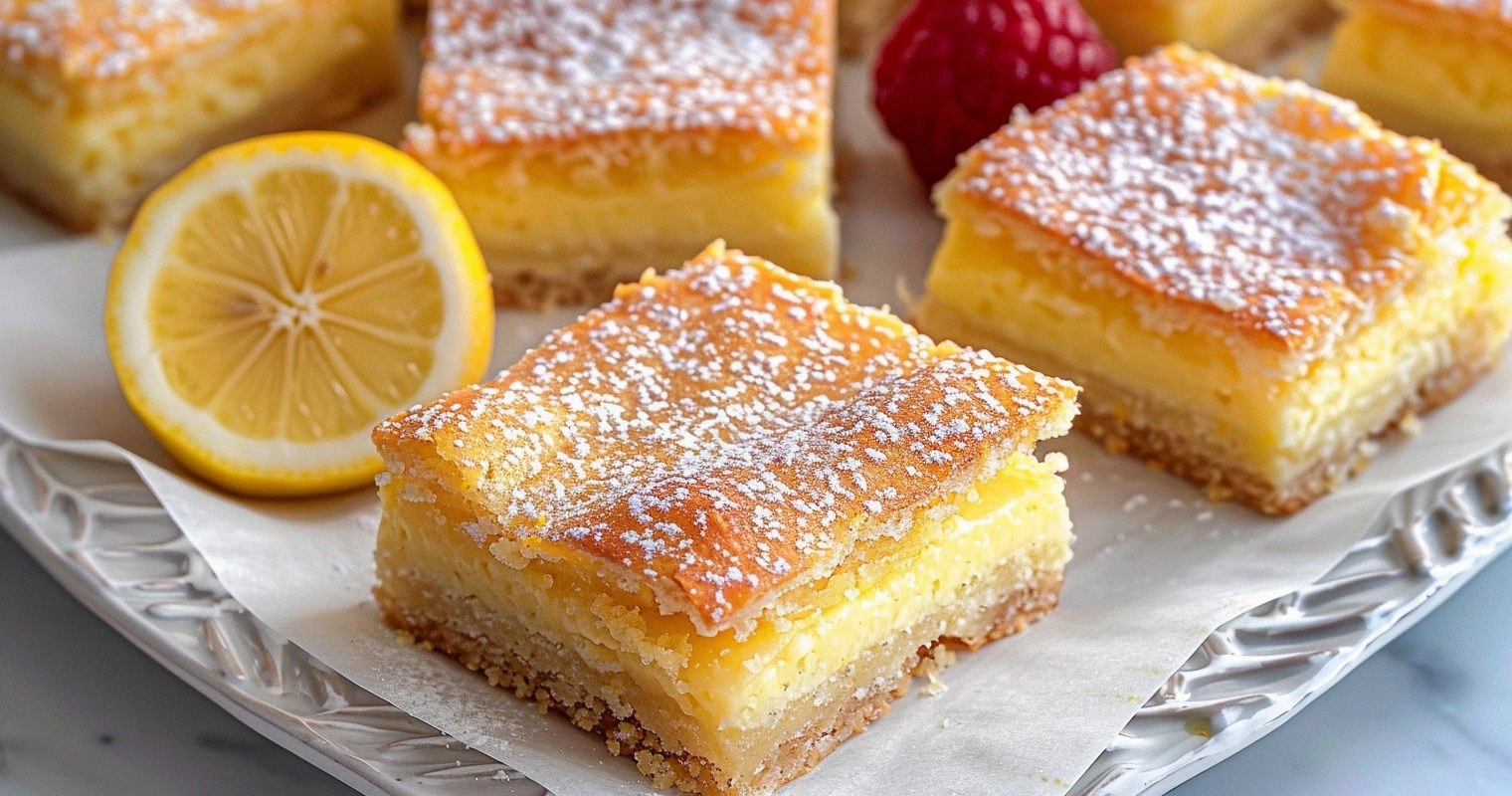
Powdered sugar on top isn’t just pretty; it melts slightly on contact, creating a whisper-thin glaze that keeps the surface from drying out. Dust right before serving—humidity turns it into sad blotches that look like the bars have acne.
Everything's prepped? Good. Let's get into the real action...
The Method — Step by Step
- Preheat your oven to 350°F (175°C). Position the rack in the center—too low and the bottom burns before the top browns, too high and the surface cracks like desert mud. While it heats, line a 9×13-inch metal pan with foil, pushing it into the corners and leaving wings that overhang the short sides by two inches. Spray the foil with baking spray, then lay a sheet of parchment on top; this double-insurance prevents sticking and gives you those beautiful sharp edges that look like they came from a professional pastry kitchen.
- Make the crust: In a food processor, blitz 2 cups (240 g) all-purpose flour with 1/2 cup (100 g) granulated sugar, 1/4 teaspoon salt, and the zest of one lemon until the sugar smells like sunshine. Add 3/4 cup (170 g) cold unsalted butter—cut into cubes—and pulse until the mixture looks like damp sand that holds together when squeezed. Tip it into the pan, spread loosely, then press firmly and evenly using the flat bottom of a measuring cup. You want it compacted enough to resist the filling, but not so dense it becomes bricklike. Slide into the oven for 20 minutes, just until the edges turn pale gold and smell like shortbread.
- While the crust bakes, prep the cream cheese cloud. In a stand mixer fitted with the whisk, beat 12 oz (340 g) room-temperature cream cheese with 1/3 cup (65 g) sugar on medium-high for a full two minutes. You’re not just mixing—you’re aerating, transforming dense dairy into silky clouds. Scrape the bowl twice; rogue lumps hide near the bottom like fugitives. When it looks like glossy ice cream, beat in 1/4 cup (60 g) sour cream and 1 teaspoon vanilla. The mixture should slump off the whisk in lazy ribbons. Set aside—no need to chill.
- Now the lemon layer—this is where most recipes jump the shark. In a separate bowl, massage 1 cup (200 g) sugar with the zest of two lemons until the sugar turns neon yellow and you can smell it across the room. Whisk in 3 large eggs plus 2 yolks, one at a time, until the mixture looks like sunshine in liquid form. Whisk in 1/2 cup (120 ml) fresh lemon juice, 2 tablespoons heavy cream, 1 tablespoon cornstarch, and that pinch of turmeric. The custard should coat a spoon like thin paint. Let it rest five minutes so the starch hydrates and the foam settles—skip this and you get volcanic bubbles on top.
- When the crust comes out, drop the oven to 325°F (163°C). Immediately brush the hot crust with a beaten egg white—this seals it faster than Ziploc. Pour the cream cheese mixture over and spread gently with an offset spatula; think frosting a delicate cake, not troweling concrete. Now slowly drizzle the lemon custard on top. Start at one corner and let physics do the rest; the layers stay distinct like a nebula in a glass pan.
- Bake for 22–25 minutes. The edges should look set, but the center wobbles like a relaxed stomach when you jiggle the pan. If the top browns before the center moves, tent loosely with foil—no shame, we’ve all been there. Over-bake and the filling turns rubbery; under-bake and it slumps like tired frosting when you slice. Trust the wiggle.
- Cool in the pan on a rack for one hour. The surface will deflate slightly—that’s normal, gravity is not a personal attack. Then refrigerate at least four hours, preferably overnight. During this spa retreat, the starch finishes gelling, flavors marry, and the crust absorbs just enough moisture to become fork-tender without sogging out.
- Lift the slab using the foil wings onto a cutting board. Peel back the sides, grab a long sharp knife, and dip it in hot water between cuts for surgical edges. Dust with powdered sugar right before serving or the moisture creates tiny sugar freckles. Slice into 24 petite squares for polite company, or 12 generous rectangles for people you really like.
- Serve cold for maximum snap, or let them sit 10 minutes for a softer, mousse-like vibe. Either way, watch for the tell-tale silence that falls over the room—that’s the sound of everyone realizing these are the best lemon bars on planet Earth.
That's it—you did it. But hold on, I've got a few more tricks that'll take this to another level...
Insider Tricks for Flawless Results
The Temperature Rule Nobody Follows
Room-temperature dairy isn’t a suggestion; it’s culinary law. Cold cream cheese refuses to blend smoothly, creating micro-lumps that look like cottage cheese curds having an identity crisis. Set the block on the counter for two hours, or cube and microwave at 30 percent power in 15-second bursts, flipping cubes between zaps. When you can press a finger through and leave a clean hole, you’re golden.
Why Your Nose Knows Best
Trust your senses over the timer. The crust is done when it smells like buttery shortbread and the edges pull slightly from the foil—color should be pale gold, not tan. For the filling, sniff again: when you detect bright citrus above the cream-cheese aroma, it’s ready. If it starts smelling like sweet scrambled eggs, you’ve gone too far; abort mission immediately.
The 5-Minute Rest That Changes Everything
After whisking the lemon custard, let it sit undisturbed for five minutes. This hydrates the cornstarch fully and lets foam rise and dissipate. Skipping this step means a top speckled with white bubbles that look like mini icebergs—tasty, but not Instagram-worthy. Patience, young padawan.
Cutting Clean Like a Pro
Heat is your friend. Dip a long chef’s knife in boiling water, wipe dry, then slice in one confident press—no sawing. Wipe the blade between cuts for bakery-window edges. For show-off points, trim the very edges first (chef’s treat), leaving a perfect rectangle that looks like it came from a Parisian patisserie.
Flavour Flip the Next Day
Day-two bars taste even brighter. Citrus oils continue mingling, the crust settles, and that tangy-sweet balance hits harder. If you need them photo-perfect, dust with fresh powdered sugar just before serving; humidity melts the first coat into a thin glaze, so a last-second snowstorm keeps things magazine-ready.
Creative Twists and Variations
This recipe is a playground. Here are some of my favorite ways to switch things up:
Berry Swirl Lemon Bars
Drop teaspoonfuls of raspberry or blueberry jam onto the lemon layer and drag a toothpick through for psychedelic ripples. Use tart jams to keep the sweet-tart balance; otherwise it tastes like candy instead of fruit. Serve with extra berries on the side for people who want to pretend it’s healthy.
Coconut Dream Version
Replace 1/4 cup flour in the crust with unsweetened shredded coconut and swap the heavy cream for full-fat coconut milk. The topping browns like toasted marshmallows and the aroma transports you straight to a beach bar—minus the sand in your shorts.
Lavender Honey Lemon Bars
Steep 1 teaspoon dried culinary lavender in the lemon juice for 30 minutes, then strain. The floral note whispers rather than shouts, making these taste like English garden parties where everyone wears floppy hats. Use orange blossom honey for extra perfume.
Ginger Snap Crust
Swap the shortbread base for crushed gingersnaps mixed with melted butter. The spicy warmth plays off the citrus like best friends who finish each other’s sentences. Bonus: the molasses in the cookies deepens the color so the bars look sun-kissed even in January.
Mini Cheesecake Bites
Press the crust into mini-muffin tins, pre-bake, then layer as directed. Bake 12–14 minutes total. Pop them out for two-bite party bombs that disappear faster than free drinks at a wedding. Freeze extras (ha, extras) and snack straight from the freezer like lemon ice cream in pastry form.
Key Lime Remix
Sub key lime juice and zest for lemon, add 1/4 teaspoon grated fresh ginger to the cream cheese. The result tastes like Florida vacations and salsa music. Warning: may cause spontaneous conga lines in the kitchen.
Storing and Bringing It Back to Life
Fridge Storage
Keep bars in the pan, tightly wrapped in plastic, for up to five days. The flavor improves overnight, peaks at day two, then slowly fades. If the crust starts softening, lay a paper towel under the foil to absorb excess moisture—like a diaper for your dessert.
Freezer Friendly
Cut into squares, layer between parchment in an airtight container, and freeze up to two months. Thaw overnight in the fridge or 30 minutes at room temp. They taste remarkably fresh, though the crust loses a smidge of snap—still better than 90 percent of bakery offerings.
Best Reheating Method
These are designed to be cold, but if you want that fresh-baked vibe, microwave a square on 50 percent power for 8–10 seconds—just enough to knock the chill off without melting the layers. Serve with a hot espresso for a temperature tango that makes your taste buds tango too.