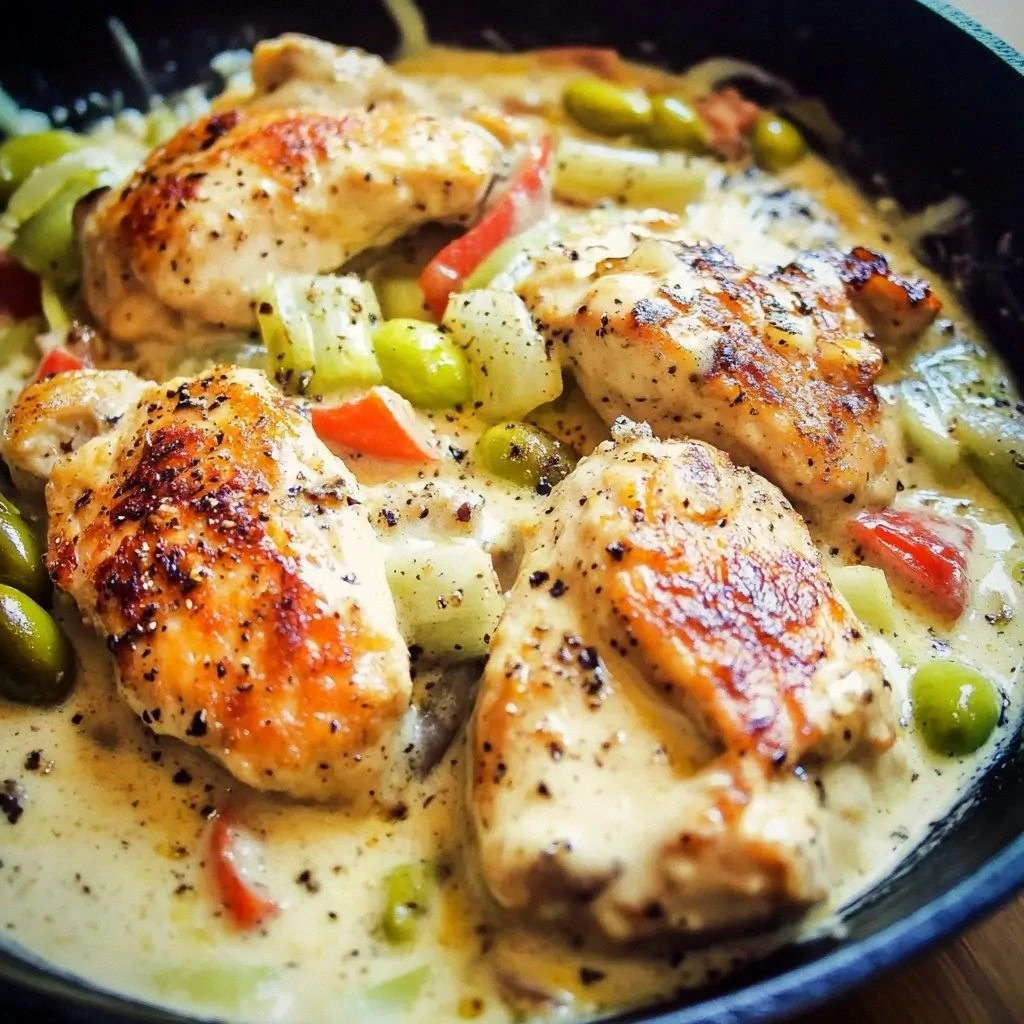
I remember the night I almost turned my kitchen into a disaster zone. I was craving something creamy, slightly spicy, and utterly comforting, but my recipe book was a blank page. I stared at the fridge, saw a handful of chicken thighs, a jar of pepperoncini, and a splash of heavy cream. I decided to combine the two into a skillet masterpiece, and the result was a dish that made me shout, “I dare you to taste this and not go back for seconds.” The sizzling sound as the olive oil hit the hot pan was the first promise of flavor, and the aroma of garlic and onion filled the room, making the kitchen feel like a secret supper club.
Picture yourself pulling this out of the skillet, the steam rising like a fragrant cloud, the pepperoncini giving a bright, tangy pop that cuts through the richness of the cream. The sauce coats the chicken like velvet, the edges of the thighs crisping just enough to give a satisfying snap. Every bite feels like a balance of savory, spicy, and creamy—a dance of textures that leaves you asking for more. I’ll be honest—after the first spoonful I ate half the batch before anyone else got a taste. This is hands down the best version you'll ever make at home, and it’s simple enough that even a kitchen novice can master it.
What makes this version stand out? It’s not just the combination of ingredients; it’s the technique and the little secrets that elevate the dish. The pepperoncini’s brine adds a subtle acidity that brightens the sauce, the heavy cream creates a silky mouthfeel, and the Parmesan melts into a nutty finish. The chicken thighs stay moist because we sear them first and finish them in the sauce, not overcook them. And the best part? The skillet method means everything cooks in one pan—clean-up is a breeze, and the flavors meld beautifully. Let me walk you through every single step—by the end, you'll wonder how you ever made it any other way.
I’ve spent countless evenings experimenting with variations, but this particular blend of pepperoncini and cream has become my go-to comfort dish. It’s perfect for a cozy dinner on a rainy evening or a quick weeknight meal that feels gourmet. The combination of heat, tang, and richness creates a symphony of flavors that dance on the palate. And if you’re wondering whether you need to be a culinary wizard to pull this off—no, you’re not. With a few simple steps, a skillet, and a dash of confidence, you’ll be serving a dish that even your picky friends will rave about. So, grab your skillet, and let’s dive in.
What Makes This Version Stand Out
- Flavor: The pepperoncini brine gives the sauce a bright, vinegary punch that cuts through the cream’s richness, creating a balanced taste that’s both comforting and exciting.
- Texture: The chicken thighs stay juicy and tender inside while developing a caramelized crust outside, giving each bite a satisfying contrast.
- Ease: One-pan cooking means less mess, less time, and more flavor because all the ingredients cook together, infusing one another.
- Ingredient Quality: Fresh, high‑quality chicken thighs and real pepperoncini peppers elevate the dish from ordinary to extraordinary.
- Crowd‑Pleaser: The mild heat and creamy sauce appeal to a wide range of palates, making it a hit at family dinners or casual gatherings.
- Make‑Ahead Potential: The dish keeps well in the fridge and reheats beautifully, so you can prepare it ahead of time for busy evenings.
- Versatility: Swap the pepperoncini for sun‑dried tomatoes or add a splash of white wine for a new twist.
- Presentation: A sprinkle of fresh parsley and extra parmesan on top gives the dish a polished, restaurant‑style finish.
Alright, let's break down exactly what goes into this masterpiece…
Inside the Ingredient List
The Flavor Base
The onion and garlic are the aromatic foundation. Finely chopping the onion ensures it cooks quickly and releases its natural sweetness. Minced garlic adds a punch of depth that lingers in every bite. Together, they form a savory bed that supports the pepperoncini’s bright tang and the cream’s richness. If you skip this step, the sauce will taste flat and lack the complex undertones that make the dish memorable.
Tip: Sauté the onion and garlic until they’re translucent and fragrant—about 3-4 minutes. Don’t rush; a slightly caramelized onion will give the sauce a deeper flavor profile.
The Texture Crew
Chicken thighs are the star of this dish. Their higher fat content compared to breasts keeps them moist and tender, even when finished in a creamy sauce. Trim any excess fat to avoid an overly greasy result. The butter adds a silky finish, while the olive oil provides a neutral base that helps the chicken brown evenly.
If you prefer a leaner option, substitute boneless, skinless chicken breasts, but be careful not to overcook them; they can dry out quickly.
The Unexpected Star
Pepperoncini peppers are more than just a garnish. Their mild heat and vinegary brine create a unique flavor profile that balances the richness of the cream. The brine’s acidity brightens the sauce and helps the flavors meld. If you’re new to pepperoncini, start with ½ cup sliced peppers and adjust to taste. The pepperoncini also adds a subtle crunch that contrasts nicely with the silky sauce.
Fun Fact: Pepperoncini peppers originated in Italy but were popularized in the United States as a staple in Italian-American cuisine. Their mild heat makes them a favorite for those who enjoy a gentle kick.
The Final Flourish
Heavy cream brings the dish a luxurious, velvety texture that coats the chicken and pepperoncini. Grated parmesan cheese adds a nutty, umami depth that ties the sauce together. The Italian seasoning, salt, and black pepper bring the dish into balance, while a pinch of red pepper flakes can add an extra layer of heat if you’re feeling adventurous.
If you’re watching calories, consider swapping heavy cream for half‑and‑half or a lower‑fat cream. The sauce will be lighter but still creamy, though it may not thicken as well.
Everything's prepped? Good. Let's get into the real action...
The Method — Step by Step
- Heat the skillet over medium‑high heat. Add the olive oil, letting it shimmer. The oil should be hot enough that a splash of water sizzles immediately. This is the moment of truth—your skillet must be hot to get that perfect sear on the chicken.
- Pat the chicken thighs dry with paper towels. Season both sides lightly with salt and black pepper. Place the thighs skin‑side down in the hot skillet. Let them sear untouched for 4-5 minutes until a golden crust forms. Don’t move them; this creates the flavor foundation.
- Flip the thighs and add the butter. As it melts, spoon it over the chicken to baste. The butter adds richness and helps the chicken brown evenly. Cook for another 3-4 minutes, or until the thighs are almost cooked through.
- Remove the chicken temporarily and set it aside. In the same skillet, add the finely chopped onion. Sauté until translucent, about 3-4 minutes. Then add the minced garlic and cook for an additional 30 seconds until fragrant. Watch the aroma—it should smell toasty and inviting.
- Stir in the sliced pepperoncini and their brine. Let them cook for 1-2 minutes so the flavors meld. The brine will start to reduce slightly, concentrating the tang.
- Pour in the low‑sodium chicken broth and bring to a gentle simmer. The liquid should reduce by about a third, concentrating the sauce’s flavor. Keep the heat low enough that it doesn’t boil aggressively; you want a slow, steady reduction.
- Add the heavy cream, stirring constantly to prevent separation. Bring the mixture to a low simmer and let it thicken slightly, about 3-4 minutes. If the sauce isn’t thickening to your liking after this time, mix the cornstarch with cold water to create a slurry and stir it in. Allow it to cook for an additional minute until it reaches your desired consistency.
- Return the chicken thighs to the skillet, nestling them into the sauce. Sprinkle the grated parmesan and Italian seasoning over the top. Reduce the heat to low, cover the skillet, and let the chicken finish cooking in the sauce for 5-7 minutes, or until the internal temperature reaches 165°F (74°C).
- Remove the skillet from heat and let the dish rest for 2 minutes. This rest allows the juices to redistribute, keeping the chicken moist.
- Garnish with fresh parsley and an extra sprinkle of parmesan before serving. The parsley adds a bright, herbaceous note that cuts through the richness.
That's it — you did it. But hold on, I've got a few more tricks that'll take this to another level. Stay with me here, because the next section will give you insider tips that even seasoned cooks swear by.
Insider Tricks for Flawless Results
The Temperature Rule Nobody Follows
Many cooks think a higher heat is always better for searing, but the secret is a steady medium‑high temperature that lets the chicken brown without burning. Keep the skillet preheated for at least 5 minutes before adding the oil. This ensures the chicken starts searing instantly, locking in juices. If the oil starts smoking, lower the heat slightly.
Why Your Nose Knows Best
Smell is a powerful guide. When the sauce begins to thicken, you’ll notice a caramelized aroma that signals it's ready. If you’re unsure, give it a quick stir and watch for bubbles around the edges. The sauce should cling to the back of a spoon without sliding off.
The 5‑Minute Rest That Changes Everything
Letting the dish rest after cooking allows the juices to redistribute. This simple step keeps the chicken moist and prevents the sauce from separating. Cover the skillet loosely with foil for the rest period to keep the heat trapped.
The Pepperoncini Trick
If you want a milder heat, keep the pepperoncini skins on. The skins contain the most heat, so removing them gives a gentler flavor. For a spicier kick, leave the skins on or add a pinch of red pepper flakes during the final simmer.
The Parmesan Finish
Adding parmesan right before serving ensures it melts into the sauce without becoming gritty. Sprinkle it on top just before plating, and let it melt slightly from the residual heat. The result is a glossy, nutty finish that elevates every bite.
Creative Twists and Variations
This recipe is a playground. Here are some of my favorite ways to switch things up:
Sun‑Dried Tomato & Basil
Swap the pepperoncini for sun‑dried tomatoes and add fresh basil. The tomatoes give a sweet, smoky flavor, while basil adds a bright, herbal note.
White Wine & Mushroom
Add a splash of dry white wine after the onions and garlic, and sauté sliced mushrooms before adding the broth. The wine deglazes the pan, creating a deeper flavor base.
Greek Yogurt Finish
Stir in a dollop of Greek yogurt at the end for a tangy, protein‑packed twist. The yogurt adds a creamy texture without the heaviness of cream.
Smoked Paprika & Chipotle
Replace Italian seasoning with smoked paprika and add a teaspoon of chipotle powder. This gives the dish a smoky, smoky depth that pairs wonderfully with the pepperoncini.
Lemon‑Zest Kick
Grate fresh lemon zest into the sauce just before serving. The citrus brightens the dish, cutting through the richness.
Vegetarian Version
Replace the chicken with thick slices of grilled portobello mushrooms or tofu. The sauce will still cling beautifully, offering a hearty, plant‑based option.
Storing and Bringing It Back to Life
Fridge Storage
Cool the dish completely before transferring to an airtight container. Store in the refrigerator for up to 3 days. The sauce will thicken slightly, but it remains delicious.
Freezer Friendly
For longer storage, divide the dish into portions and freeze in freezer‑safe containers. It keeps well for up to 2 months. Thaw overnight in the fridge before reheating.
Best Reheating Method
Reheat on the stovetop over low heat, stirring gently. Add a splash of water or broth to restore moisture. The sauce should be heated through but not boiling to avoid separation.